
Salak
Salacca edulis Reinw.
Description
Growing requirements
Salak (Salacca edulis Reinw.) is a species of palm tree belonging to the Arecaceae family. Native to Indonesia and Malaysia, this plant thrives in tropical climates characterized by high humidity and consistent rainfall throughout the year.
The plant requires deep, fertile, and well-drained soils rich in organic matter to support its root system. It typically grows under the canopy of larger trees in its native habitat, indicating a preference for partial shade during early growth stages.
Ideal temperatures for cultivation range between 20°C and 30°C. The species is highly intolerant to low temperatures and frost, which can cause significant physiological damage or death to the plant tissue.
Proper water management is essential for successful growth. While the soil should be kept moist, it must not remain waterlogged, as stagnant water promotes root rot and fungal infections.
Farmers usually practice planting in areas with windbreaks to protect the palm's large fronds from mechanical damage caused by strong winds, which are common in tropical agricultural zones.
Yield
Salak palms typically reach maturity and begin to bear fruit within 3 to 5 years after planting. The inflorescences are produced at the base of the plant, often close to the ground, which makes them unique among palm species.
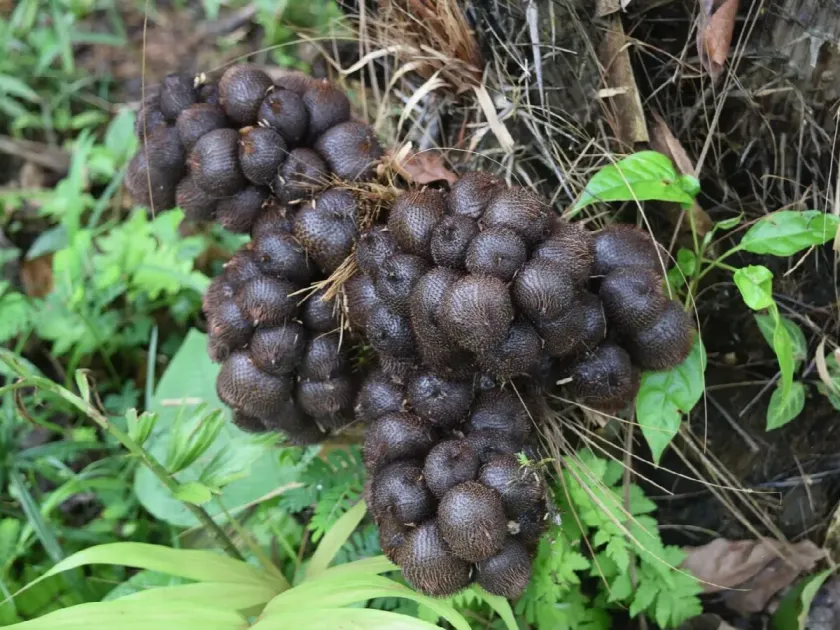
The fruit, commonly known as "snake fruit" due to its scaly reddish-brown skin, is harvested when fully ripe. Yields vary depending on the genotype and the intensity of the agricultural management practices applied.
Harvesting requires significant caution due to the sharp thorns located on the fronds and stems. Workers must wear protective gear to prevent injuries while collecting the fruit clusters manually.
Post-harvest handling is critical, as the fruit has a relatively short shelf life at room temperature. Proper sorting and storage in cool, ventilated conditions can help maintain quality before reaching the market.
The economic value of Salak lies in its distinct sweet and acidic taste, which is highly prized in local markets. Besides fresh consumption, the fruit is utilized in the production of canned goods, preserves, and traditional medicine.
Main diseases and pests
The primary threats to Salak plantations are fungal diseases such as leaf blight and root rot, which are exacerbated by high humidity levels and poor soil drainage. Maintaining sanitary conditions in the orchard is vital.
Insect pests, particularly weevils and certain types of caterpillars, can infest the palm's stems and developing fruit. These pests can significantly reduce the marketable yield and weaken the overall structure of the palm.
Agricultural managers often employ integrated pest management (IPM) strategies. These include the removal of infested plant parts, monitoring of insect populations, and the judicious use of biological controls.
Regular maintenance pruning is a necessary practice to remove dead or diseased fronds, which helps improve airflow within the canopy and reduces the surface area available for fungal spores to settle.
Soil health monitoring ensures that the palm receives adequate nutrients, as nutrient deficiencies can make the plants more susceptible to environmental stress and opportunistic pathogens.