
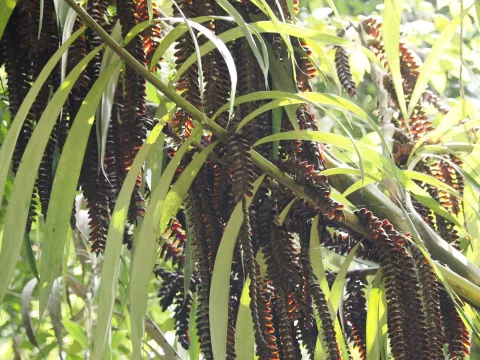
Plectocomia
Plectocomia
Plectocomia is a genus of large climbing palms within the Arecaceae family. Native to the tropical regions of Southeast Asia and the Himalayas, these plants are known for their rapid vertical growth.
What the section contains


Plectocomia
The species thrives in environments with high humidity and high temperatures, typical of rainforest understories. They require fertile, deep, and well-drained soils to sustain their long-reaching stems.
Botanically, Plectocomia is characterized by its long, flexible, and often spiny stems that use hooks or cirri to scramble over other vegetation. The leaves are large, pinnate, and serve as effective solar harvesters.
In terms of cultivation, these plants are notoriously difficult to propagate outside their native range due to strict requirements for light intensity and moisture balance.
Ecologically, Plectocomia acts as a pioneer species in forest gaps, utilizing light-filled areas to rapidly expand its reach within the canopy structure.
Harvesting Plectocomia involves cutting mature stems from wild populations. This is a skilled trade, as the plant is covered in sharp, defensive thorns that protect its vulnerable sections.
Once harvested, the stems are stripped of leaves and sheaths, revealing the core wood used as rattan. Sorting is essential to ensure that only the most pliable and structurally sound stems are selected.
The wood must undergo a drying and curing process to prevent microbial decay and to improve the flexibility of the material for weaving purposes.
Professional craftsmanship is then applied to shape the raw stems into furniture, decorative items, and agricultural tools. The natural resilience of the fibers makes these products highly durable.
Global demand for rattan products continues to drive interest in sustainable harvesting techniques to maintain Plectocomia populations in the long term.
Fungal infections remain a significant threat to Plectocomia, especially during the post-harvest period when humidity levels are not strictly managed. Rot can quickly compromise the structural integrity of the stems.
Pests such as wood-boring beetles are a major concern, as they target the internal tissues of the stems, causing irreparable damage to the harvestable product.
Habitat loss due to deforestation is the primary threat to the wild populations of Plectocomia. The conversion of natural forests into agricultural land severely limits their potential to spread.
Over-harvesting without adequate management practices leads to the depletion of mature specimens, making it difficult for the population to recover naturally.
Climate instability, particularly erratic rainfall patterns, can stress individual plants, making them more susceptible to both insect attacks and pathological infections.