
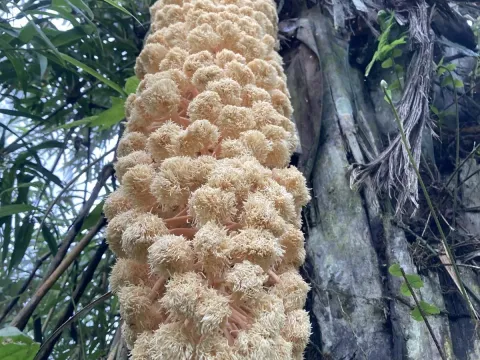
Phytelephas
Phytelephas
Phytelephas is a genus of palms in the family Arecaceae, native to the tropical forests of South America. These trees are highly specialized, thriving in the warm, humid environments typical of equatorial rainforests.
What the section contains


Phytelephas
To cultivate these palms successfully, fertile, well-draining soils with high organic content are essential. They typically inhabit alluvial plains or riverbanks, where moisture is consistently available to the root system throughout the year.
The climate requirements for Phytelephas include a steady temperature range between 22 and 30 degrees Celsius. They are intolerant of frost and extreme drought, as they require significant water availability to develop their fruit properly.
Botanically, the plant is characterized by its slow development, especially in the juvenile stage when it is adapted to the shade of the forest canopy. The leaves are large, pinnate, and highly efficient at capturing light in low-light environments.
The main agricultural significance of Phytelephas lies in its seeds, known as tagua nuts. When dried, the endosperm becomes extremely hard and resembles ivory, leading to its common name, vegetable ivory, used in various fine crafts.
The primary threats to Phytelephas plantations are soil-borne fungal diseases, which often result from poor drainage. Waterlogged soil leads to root rot, a condition that can quickly become fatal for the palm.
Insects like the palm weevil pose a major threat to the health of the tree, as they bore into the trunk and soft tissues. This structural damage can interrupt nutrient transport and weaken the palm against further infections.
Leaf blight and various spotting diseases can occur in humid conditions with limited airflow. These diseases reduce the photosynthetic capacity of the plant and, consequently, its ability to produce high-quality yields.
Habitat loss due to land clearing for other intensive crops remains a significant challenge for the preservation of wild Phytelephas populations. Maintaining forest diversity is critical for the long-term viability of the species.
Effective management includes regular monitoring of tree health and maintaining appropriate planting densities to ensure natural air circulation. Integrated pest management strategies are recommended to minimize chemical reliance.
Harvesting Phytelephas involves collecting the large, woody fruit clusters once they reach maturity. Because the fruit ripens unevenly, selective harvesting throughout the year is a common practice.
Once gathered, the fruits are processed to remove the fibrous husk and extract the hard seeds inside. These seeds must be carefully dried to harden the endosperm fully and prevent any risk of microbial decay.
The drying process is a crucial step for achieving the ivory-like hardness required for industrial and artistic applications. Proper control of humidity levels during this phase is essential to ensure consistent quality.
After processing, the seeds are sorted and prepared for craftsmen who use them for carving, button manufacturing, and other decorative uses. The material's density allows for high-quality finishing and polishing.
Tagua nut production is often viewed as a model for sustainable development, as it promotes the economic value of living palm trees. This helps prevent deforestation by providing an incentive to keep the forests intact.