
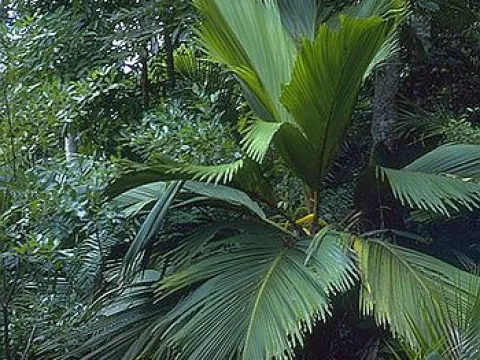
Phoenicophorium
Phoenicophorium
Propagation of Phoenicophorium is exclusively achieved through seeds. Due to their relatively short viability, seeds must be planted as soon as possible after harvesting to ensure successful germination rates.
What the section contains

Phoenicophorium
The germination process requires consistent warm temperatures ranging between 25 and 30 degrees Celsius. Soaking the seeds in warm water for several days before sowing can significantly improve the speed and uniformity of sprouting.
A sterile, lightweight, and well-draining growth medium is essential for young seedlings. A mixture composed of peat moss, coconut coir, and perlite provides the ideal balance of moisture retention and aeration for root development.
Containers must be kept covered with plastic or glass to maintain the high humidity necessary for germination. Regular ventilation is required to prevent condensation buildup and the growth of mold on the soil surface.
Seedlings are extremely sensitive to root disturbance. When transferring them to individual pots, it is crucial to use the shifting method to keep the root ball intact, ensuring the plant experiences minimal transplant shock.
Native to the Seychelles, Phoenicophorium is a tropical palm that demands constant heat. It thrives at temperatures between 22 and 28 degrees Celsius and should never be exposed to temperatures dropping below 15 degrees Celsius.
While younger plants are shade-tolerant, adult specimens require bright, filtered light to develop their characteristic foliage. Direct sunlight should be avoided, as it can easily scorch the delicate leaf surfaces.
The ideal soil for this species is fertile, slightly acidic, and possesses excellent drainage properties. A waterlogged substrate can lead to rapid root rot, which is often fatal for this delicate ornamental palm.
Humidity is a vital factor for the well-being of Phoenicophorium, requiring levels above 60–70 percent. In drier climates, the use of humidifiers or regular misting of the fronds is necessary to prevent brown leaf tips.
Nutrient management involves regular feeding during the growing season using a balanced palm-specific fertilizer. Micronutrients such as magnesium and iron are particularly important to prevent chlorosis and maintain deep green leaves.
Spider mites are the most common pests affecting this palm, especially in environments with low air humidity. They thrive by piercing plant tissue, which results in discolored leaves and significant loss of aesthetic quality.
Scale insects and mealybugs frequently colonize the leaf axils and the trunk base. These pests sap the plant's vitality and secrete honeydew, which can promote the growth of sooty mold, further damaging the palm.
Fungal diseases, including root rot and leaf spot, typically arise due to overwatering or stagnant air. Proper spacing and airflow are critical preventative measures to ensure the plant remains healthy and disease-free.
Chlorosis, a common physiological disorder, often indicates a deficiency in essential minerals or incorrect soil pH. Correcting the nutritional balance usually resolves the issue, provided that the roots remain functional and healthy.
Maintaining high hygiene standards by removing dead leaves and monitoring the substrate surface is key to pest and disease control. Proactive care ensures the longevity and beauty of this rare tropical specimen.