
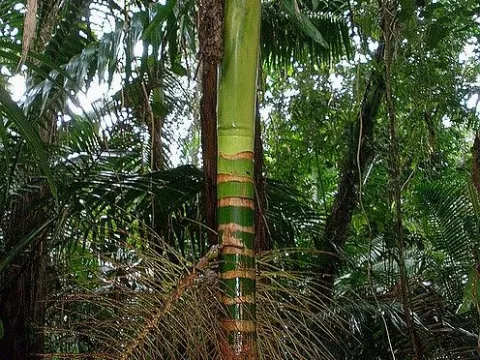
Prestoea
Prestoea
Propagation of the Prestoea genus is primarily carried out through seeds. Freshly harvested seeds should be sown in well-drained substrate immediately after ripening, as they quickly lose viability when dried out.
What the section contains

Prestoea
Germination requires stable, high temperatures ranging from +25°C to +30°C. The sowing containers must be kept in conditions of high humidity, keeping the soil substrate consistently moist but without waterlogging.
The germination process can be slow and uneven, taking anywhere from a few weeks to several months. Using bottom heat for the seed containers significantly accelerates the emergence of seedlings.
Young seedlings require gradual adaptation to bright light, as they naturally develop under the canopy of humid tropical forests. Transplanting should be done carefully to avoid damaging the sensitive root system.
Young plants should be transplanted to their permanent outdoor location or larger containers only after reaching sufficient height and forming a sturdy stem capable of resisting environmental stressors.
Prestoea belongs to the Arecaceae (Palm) family and is a typical representative of tropical rainforest flora. The plant prefers well-drained, fertile soils rich in organic matter with a neutral to slightly acidic pH.
The crop is highly demanding regarding air and soil humidity. In cultivation regions, it requires regular rainfall or high-quality artificial irrigation to prevent the root ball from drying out.
The optimal temperature range for active vegetative growth is +22...+28°C. The plant poorly tolerates sharp temperature fluctuations, cold winds, and prolonged droughts, which can be fatal for young specimens.
Regarding light exposure, diffused light or light shading is preferred. Direct sunlight can cause leaf burns, so it is important to control the level of insolation in both industrial and ornamental cultivation.
To maintain the health and ornamental value of the palm, regular fertilization with complex fertilizers containing essential micronutrients, especially nitrogen and magnesium, is necessary during the active growing season.
The main pests for Prestoea species include various types of scale insects, spider mites, and mealybugs. They infest leaf blades, sucking the sap and inhibiting the plant's overall development.
Under conditions of excessive soil moisture and lack of ventilation, plants are susceptible to fungal diseases such as root rot and leaf spot. Prevention consists of maintaining proper watering regimes and soil disinfection.
In outdoor settings, palms can suffer from phytophthora and other soil-borne pathogens. Maintaining spacing between young seedlings is crucial to prevent the spread of epiphytotics.
Timely sanitary pruning of dead or diseased leaves helps improve canopy aeration and reduces the risk of fungal infections in dense plantings.
For pest control, regular inspections and the use of biological control agents or systemic insecticides are recommended in cases of severe infestation.
The economic use of Prestoea includes harvesting fruits, which are consumed in some regions, as well as utilizing fibers and wood in local craft production.
Fruit harvesting is done by hand once the fruits have reached full maturity and developed their characteristic color. Due to the height of some palm species, this process requires specialized equipment or climbing skills.
Leaf material may also be harvested for roofing or weaving purposes, which requires careful cutting of mature leaves without damaging the palm's terminal bud.
Harvesting plant materials must be done carefully to avoid damaging the main trunk, which, for many palm species, is the only growth point and cannot regenerate after significant damage.
Harvested produce requires immediate processing, as palm fruits are prone to rapid fermentation and decay in the high temperatures of the tropical climate.