
Plectocomia assamica
Plectocomia assamica
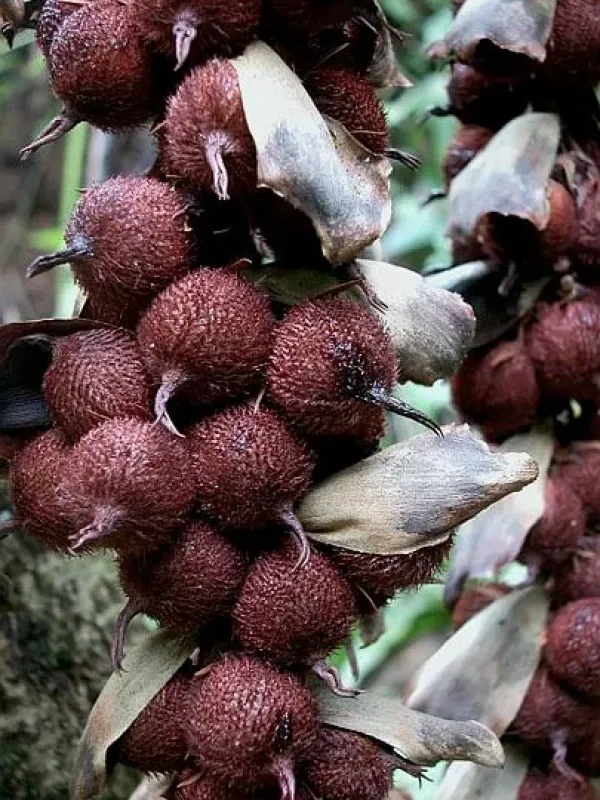
Description
Growing requirements
Plectocomia assamica is a robust climbing palm species belonging to the Arecaceae family. It is recognized as an important source of rattan, a valuable raw material utilized extensively in the global furniture and handicraft industries.
Native to the humid tropical forests of Northeast India and parts of Southeast Asia, this palm requires a warm and highly humid environment to thrive. It naturally occupies the understory of dense forests, relying on other vegetation for vertical support.
Cultivation requires soil that is rich in organic matter and consistently moist, yet well-drained. The plant cannot withstand waterlogged conditions, which can quickly lead to root decay, nor can it tolerate periods of extreme drought.
The climatic preferences for Plectocomia assamica involve a stable tropical temperature regime. Exposure to direct frost or sudden cold snaps is fatal to this species; therefore, commercial cultivation is restricted to tropical and subtropical zones.
Agrotechnical practices involve providing structural support for the climbing stems. In plantation settings, this is often achieved through the use of trellises or by leaving existing trees to serve as living support systems for the growing palms.
Main diseases and pests
The most common threats to Plectocomia assamica include fungal pathogens that thrive in high-humidity environments. These pathogens often attack the root system, causing plant decline if drainage is inadequate.
Wood-boring insects present a significant challenge by tunneling into the stem. This damage compromises the structural integrity of the rattan, significantly reducing its commercial value and sometimes making it unusable for furniture production.
Competition for sunlight and nutrients with invasive weeds or faster-growing vines can suppress the growth rate of the palm. Regular weeding and plantation maintenance are essential to minimize this competitive pressure.
Improper harvesting techniques, such as damaging the plant's core during the cutting process, can introduce secondary infections. This necessitates the training of harvesters to maintain strict hygiene standards throughout the operation.
Environmental stress, particularly caused by shifting microclimatic conditions, can increase the plant's susceptibility to these pests and diseases, emphasizing the need for carefully managed agroforestry practices.
Harvesting
The primary economic output of Plectocomia assamica is its long, flexible stem. Harvesting is conducted when the canes reach specific maturity, thickness, and hardness, ensuring they can be used for high-quality manufacturing purposes.
Harvesting involves carefully cutting the canes at the base and removing the prickly leaf sheaths that protect the stem. The canes are then cleaned, dried under the sun, and sometimes treated to increase their durability against fungi and borers.
Sustainability is a core component of modern harvesting techniques. By cutting only the mature canes and leaving the apical meristem or root system intact, growers can ensure that the plant continues to produce new shoots for subsequent harvests.
Post-harvest processing includes sorting the canes by diameter and quality. High-grade canes are highly prized for weaving complex furniture designs, while lower grades may be utilized for industrial applications or rough binding materials.
Efficient harvesting also requires skilled labor, as the plant's natural defensive spines can cause injury to workers during the collection process, necessitating the use of specialized protective equipment.