
Plectocomia elongata
Plectocomia elongata
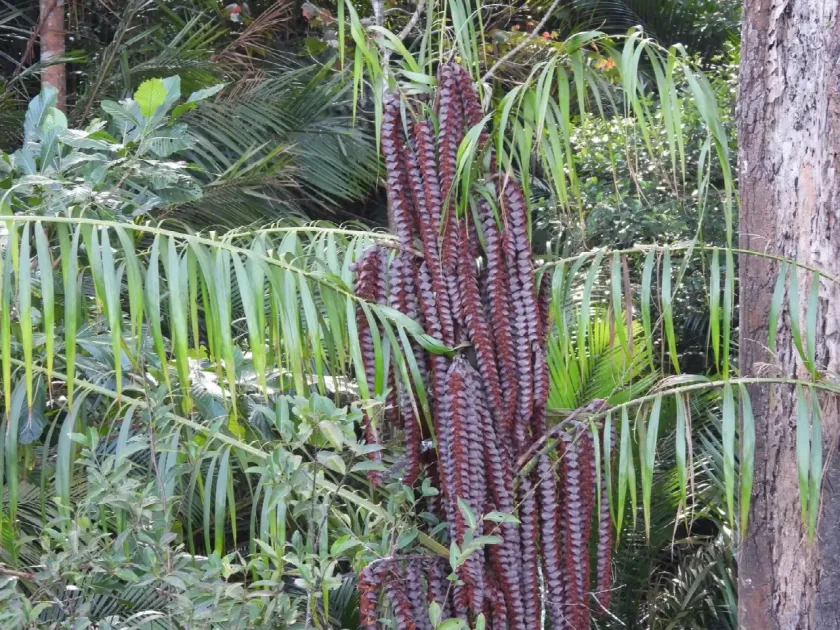
Description
Sowing dates
Plectocomia elongata is a large, climbing palm species belonging to the Arecaceae family, highly valued for its robust and flexible stems. In its native habitat, reproduction occurs via seeds, which unfortunately possess a very short viability period.
For successful cultivation, seeds must be sown immediately after harvesting. Removing the fruit pulp and using a well-aerated, moisture-retentive substrate—such as a mixture of sand and peat—is essential to provide the necessary environment for germination.
Germination chambers or shaded nurseries must maintain temperatures between 25 and 28 degrees Celsius. Consistent, high humidity levels, often exceeding 75%, are critical, as seedlings are exceptionally sensitive to moisture stress in the early stages.
Transplanting hardened seedlings into the field is best performed at the onset of the monsoon season. This timing ensures that the root system has sufficient soil moisture to adapt to the new location before the arrival of any potential dry periods.
Biologically, this species functions as a climber. Therefore, young plants require vertical support structures to facilitate their upward growth. Utilizing existing forest trees as natural trellises is the most sustainable and cost-effective method for plantation establishment.
Growing requirements
The species is perfectly adapted to tropical environments with high, consistent rainfall. Its primary distribution covers Southeast Asian regions, including Indonesia, Malaysia, and the Philippines, where it thrives in humid lowland forest ecosystems.
Soil requirements are specific: it prefers deep, fertile, loamy soils that provide excellent drainage. Despite its affinity for water, the plant is intolerant to waterlogged soils, which quickly lead to root rot and stunted development.
Light requirements shift throughout the plant's life cycle. While juvenile plants thrive in semi-shaded forest understories, mature palms demand significant solar exposure to reach the canopy and sustain the rapid production of their elongated stems.
Nutrient uptake is largely supported by natural forest organic matter and leaf litter. In managed plantations, maintaining this natural soil structure is vital; excessive chemical fertilizers can disrupt the delicate balance of the root-associated microbiome.
Climatic stability is paramount. The species does not tolerate frosts or severe, prolonged droughts. Variations in temperature and precipitation negatively impact the stem's structural integrity, reducing its elasticity and commercial value.
Yield
The primary economic product of Plectocomia elongata is high-quality rattan, extracted from the long, durable, and flexible stems of the palm. Yield is determined by the growth rate, which can reach several meters per year under optimal conditions.
Commercial harvest typically commences when the plants are between seven and ten years old. By this stage, the diameter of the stems is suitable for large-scale application in the furniture industry and the production of complex woven goods.
Effective plantation management relies on selective harvesting, which ensures a sustainable flow of raw materials without degrading the overall forest health. This model supports long-term ecological and economic viability.
The quality of the rattan is directly influenced by environmental conditions during the growth phase. Consistent, rapid growth leads to superior fiber density, whereas environmental stress can result in wood defects and brittleness.
Yield is measured in linear meters of cleaned, bark-free rattan. Standardized grading based on length and diameter ensures that the raw material meets international market requirements for furniture manufacturing and interior design.
Main diseases and pests
Plectocomia elongata is susceptible to fungal diseases triggered by poor ventilation and high humidity. Common pathogens include Phytophthora and Fusarium species, which can compromise the structural integrity of the stems and lead to widespread losses.
Pests, particularly the palm weevil, pose a significant risk by targeting the apical meristem or growing point. Damage to this critical part of the palm leads to the cessation of vertical growth and often the eventual death of the entire plant.
In the early stages of growth, competition from aggressive weeds can suppress the development of the palm by limiting access to nutrients and light. Routine clearing of the forest floor around the plant base is a mandatory agricultural practice.
Over-exploitation and excessive harvesting intensities constitute the greatest risk to natural populations. Unregulated forestry practices lead to soil erosion and the loss of the species' inherent capacity for natural regeneration.
Climate change and unpredictable dry spells increase the vulnerability of the plants to secondary infections. Implementing sustainable forest management and biodiversity protection measures is essential to safeguard the future of the species.
Harvesting
Harvesting is a labor-intensive process that requires precision to avoid damaging the host trees. Experienced workers use machetes to carefully sever the stems, ensuring the palm's integrity is maintained during the extraction process.
Stems must be cleaned of protective spines and leaf sheaths immediately upon harvesting in the field. This rapid processing is crucial to facilitate easier transport and to prevent the degradation of the stem by insects or fungi.
Efficient logistics are necessary to move the raw material from the forest to the processing facility. Minimizing transit time prevents the wood from darkening or rotting due to exposure to moisture and heat.
Primary processing involves sorting, washing, and thermal treatment, often in oil baths. This treatment enhances the flexibility and durability of the rattan, protecting it against wood-boring insects during its final service life.
Cyclical harvesting schedules ensure that each plantation area can recover. This strategic approach maintains consistent supply chains while allowing the forest to remain a productive and functional ecosystem for generations.