
Loxococcus
Loxococcus
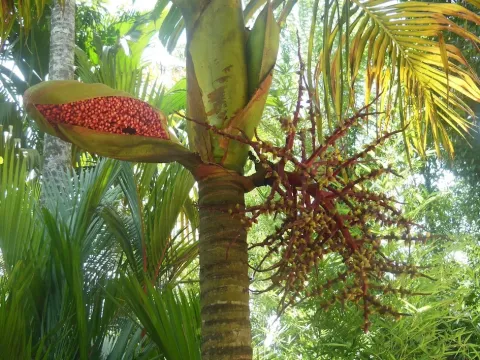
Loxococcus (Latin: Loxococcus rupicola) is a unique monotypic genus of palms belonging to the Arecaceae family. This plant is an endemic species found exclusively in the highland regions of Sri Lanka.
What the section contains

Loxococcus
In its natural habitat, this palm prefers humid tropical forests and rocky mountain slopes. It is highly sensitive to sudden temperature fluctuations and requires a consistently warm climate free from frost, which limits its natural distribution range.
Soils for the successful development of this culture must be rich in organic matter, have a loose structure, and possess excellent drainage properties. Waterlogging is fatal to the root system, despite the plant's natural preference for high atmospheric humidity.
The plant features a specific botanical trait — a slender, solitary trunk that can reach significant heights over time. The crown consists of feathery, pinnate leaves, giving the plant a decorative appearance, making it a sought-after specimen for botanical collectors.
The agricultural or economic significance of Loxococcus is limited due to its rarity. It is primarily utilized in the landscape design of tropical gardens and conservatory cultivation as a valuable ornamental specimen that preserves regional biodiversity.
The primary biological threats to Loxococcus are fungal root infections caused by improper irrigation practices. Soil waterlogging often leads to the development of root rot, which is extremely difficult to manage in mature specimens.
Among pests, the most dangerous are the palm weevil and various species of scale insects, which damage leaf blades and growing points. Regular inspection of the plants and the application of systemic insecticides are essential protective measures for maintaining plant health.