
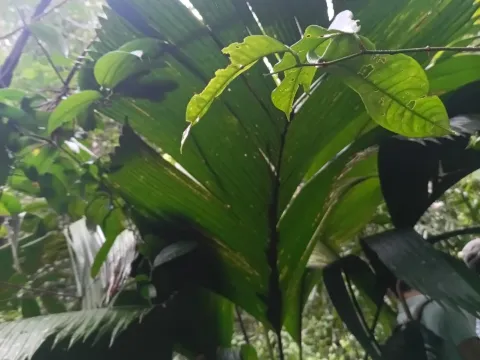
Manicaria
Manicaria
Manicaria, specifically the species Manicaria saccifera, belongs to the Arecaceae family. This plant is a typical representative of the humid tropical forests of Central and South America.
What the section contains

Manicaria
Successful cultivation requires consistently high temperatures without significant fluctuations and high air humidity. The palm prefers areas with excessive soil moisture and is frequently found in swampy regions and along riverbanks.
The plant possesses a specialized root system adapted to waterlogged, heavy soils where oxygen access is limited. Optimal growth conditions include well-drained yet permanently moist substrates rich in organic matter.
In its natural habitat, Manicaria grows under the dense forest canopy, meaning young plants require shading. Mature palms can tolerate more light, but direct exposure to intense sun in low-humidity conditions is detrimental to the foliage.
Industrial-scale cultivation of this crop is limited due to its specific ecological requirements; thus, it is more commonly grown in specialized nurseries or botanical collections.
The primary product harvested from this palm is its large, durable fronds. The leaves of Manicaria reach significant sizes and are highly valued by indigenous populations as a roofing material.
Biomass yield depends on the age of the plant and light availability. In natural populations, leaf harvesting is conducted selectively to ensure the sustainable regeneration of the palm.
Beyond the leaves, Manicaria fruits are of botanical and ethnographic interest, although their commercial use as an agricultural product remains underdeveloped.
The efficiency of exploiting Manicaria groves is directly dependent on site accessibility, as transporting heavy leaves from dense tropical forests presents a complex logistical challenge.
There is currently minimal breeding activity for this species in agronomic practice, meaning yields generally reflect those of wild forms adapted to the local climate.
The main threats to the crop are linked to changes in the hydrological regime of their habitats. The drainage of wetlands and the degradation of river ecosystems lead to a rapid decline in population numbers.
Like many members of the Arecaceae family, Manicaria can suffer from fungal root diseases caused by moisture imbalance or exposure to pathogens from adjacent crops.
Pests, such as the palm weevil, pose a serious threat to the plant's vegetative organs, weakening its immunity and reducing the quality of the leaf production.
Over-exploitation and uncontrolled leaf harvesting without adhering to proper agrotechnical intervals lead to the depletion of nutrient reserves in the trunk, making the palm vulnerable to secondary infections.
The biological resistance of the species to pests is quite high in its natural range, but in artificial plantations, the risk of insect infestations increases significantly.