
Martius fan palm
Trachycarpus martianus
Description
Growing requirements
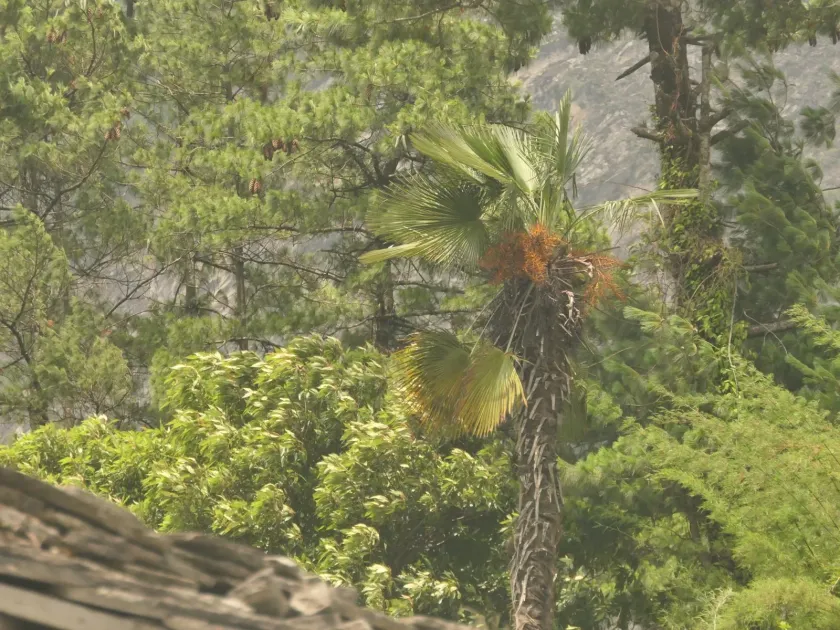
Trachycarpus martianus, commonly known as the Martius fan palm, is a distinguished member of the Arecaceae family. It is highly valued in horticulture for its slender, ringed, and relatively bare trunk, which contrasts beautifully with its large, deep-green, semi-circular fan-shaped leaves.
Originating from the Himalayan regions of India, Nepal, and Bhutan, this species has evolved to thrive in cool, high-altitude climates. Unlike some of its relatives, it prefers a semi-shaded environment in its youth, eventually tolerating more sunlight as it matures.
Agrotechnical success depends on a well-draining soil medium. A mixture of loam, sand, and organic matter is ideal. Proper drainage is the most critical factor; water must not sit around the roots, as this species is particularly susceptible to root rot in poorly aerated soils.
Temperature management is crucial. While it is more frost-tolerant than tropical palms, temperatures consistently below -5°C can cause damage. In temperate regions, it is best grown as a container plant that can be moved into a greenhouse or frost-free shed during winter.
Its primary use is ornamental. It is frequently used as a structural plant in tropical and sub-tropical landscapes, as well as an indoor specimen in large atriums or conservatories where its elegant silhouette provides a sophisticated, exotic focal point.
Main diseases and pests
The palm is prone to common pests such as spider mites and scale insects, which often appear when the plant is kept in dry indoor environments. Frequent misting and maintaining adequate ventilation are effective preventative measures for homeowners and growers.
Fungal issues, including leaf spot diseases, can occur if the humidity is too high without proper air movement. Ensuring the foliage dries out after watering and preventing water accumulation in the heart of the palm crown are essential for long-term health.