
Mangrove date palm
Phoenix paludosa
Description
Growing requirements
The Mangrove date palm (Phoenix paludosa) belongs to the Arecaceae family and is specifically adapted to saline or brackish wetland environments. Unlike common date palms, this species thrives in flooded conditions, typically found in mangrove forests of India, Bangladesh, and Southeast Asia.
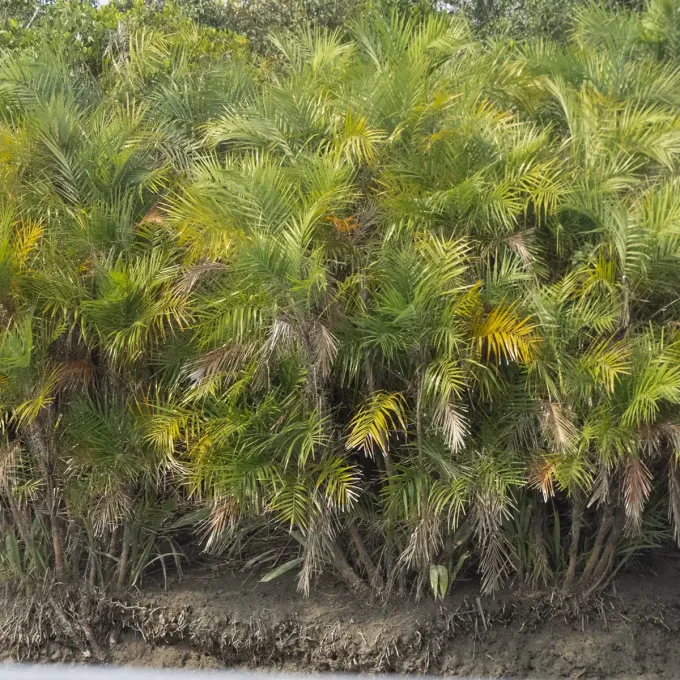
This palm is a cluster-forming species, growing up to 5 meters in height. It produces numerous stems from the base, which helps it form thickets that stabilize the soft, waterlogged soil of river deltas and coastal regions against erosion.
Climate requirements for this species are strictly tropical. It demands high humidity and constant warm temperatures throughout the year. It cannot survive in climates with frost or long dry seasons, as its physiological processes are tied to the water cycle of mangrove habitats.
The soil preference includes silty and clay-rich substrates that remain permanently saturated. The plant has developed unique tolerance mechanisms to handle soil salinity, which is usually lethal to most other agricultural date palm varieties.
Agricultural management is minimal, as the plant is largely adapted to the wild. Propagation is usually achieved through seeds or by dividing the dense clusters in their natural environment, requiring careful handling to ensure establishment.
Harvesting
Economic uses of the Mangrove date palm are primarily focused on local craft and construction. The tough leaves are harvested to thatch roofs, weave mats, baskets, and create various tools essential for coastal living.
The stems of the plant provide structural material for light buildings and walkways in swampy terrains. This wood is valued for its natural resistance to damp conditions, making it a reliable resource in regions where conventional timber might rot.
While the fruits are not a primary commercial crop for human consumption, they provide vital sustenance for various avian and terrestrial wildlife within the mangrove ecosystem, supporting local biodiversity.
Sustainable harvesting involves selective cutting of leaves and stems to allow the plant to regenerate. This practice is crucial to maintaining the health of the coastal barriers that these palms help to support.
In addition to its utilitarian value, the plant is increasingly recognized for its role in coastal restoration projects, as its root system is highly effective at trapping sediment and mitigating the impacts of storm surges.