
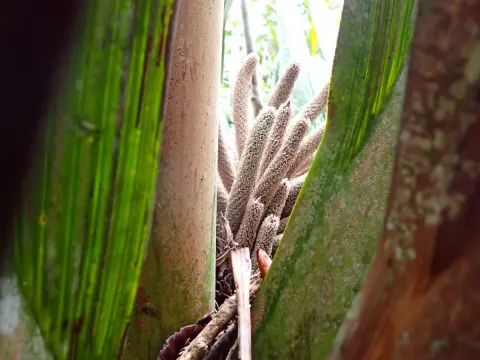
Marojejya
Marojejya
Marojejya is a genus of rare palms belonging to the Arecaceae family, endemic to the rainforests of Madagascar. These plants have evolved to thrive in the dense understory of tropical forests, where they are protected from direct sun and exposed to high levels of atmospheric humidity.
What the section contains


Marojejya
To cultivate Marojejya successfully, one must maintain tropical climate conditions with temperatures consistently above 20°C (68°F). Exposure to cold drafts or freezing temperatures is fatal for this species, making it suitable only for greenhouses, conservatories, or climate-controlled environments.
The soil requirements for this palm are quite specific: it demands a well-draining, nutrient-rich substrate. A mix of peat moss, pine bark, and organic leaf compost is ideal for creating a soil structure that holds moisture while allowing oxygen to circulate around the roots.
Lighting should be bright but indirect. Since these palms grow in nature beneath a forest canopy, they are not adapted to direct, harsh sunlight. In greenhouse settings, growers should use shade cloth to prevent leaf scorch and maintain the deep green color of the foliage.
Water management is critical for the long-term health of the Marojejya. The root system must remain moist but never waterlogged. High humidity levels, ideally above 70%, are essential for the palm to develop properly and remain free of physiological stress.
Root rot caused by Phytophthora or Pythium species is the most common disease encountered when growing Marojejya. This often occurs due to poor drainage or excessive watering, which causes the roots to suffocate and decay within the container.
Pests such as spider mites are highly problematic in greenhouse conditions where air circulation might be insufficient. These mites thrive in dry air, so maintaining proper humidity and periodic misting are effective preventative measures against infestations.
Scale insects frequently target the stems and the undersides of the leaves. Manual removal combined with the application of horticultural oils or systemic insecticides is the standard treatment protocol for managing these resilient pests in rare plant collections.
Nutrient deficiencies, particularly magnesium or potassium, can cause yellowing or spotting on the fronds. A balanced, micronutrient-rich palm fertilizer should be applied during the growing season to ensure the plant receives all the necessary elements for development.
As a conservation-dependent genus, Marojejya faces risks from habitat fragmentation in the wild. Cultivation in controlled environments serves as an essential method for preserving the germplasm of these unique Malagasy palms, protecting them from total extinction.