
Lipstick palm
Cyrtostachys renda
Description
Growing requirements
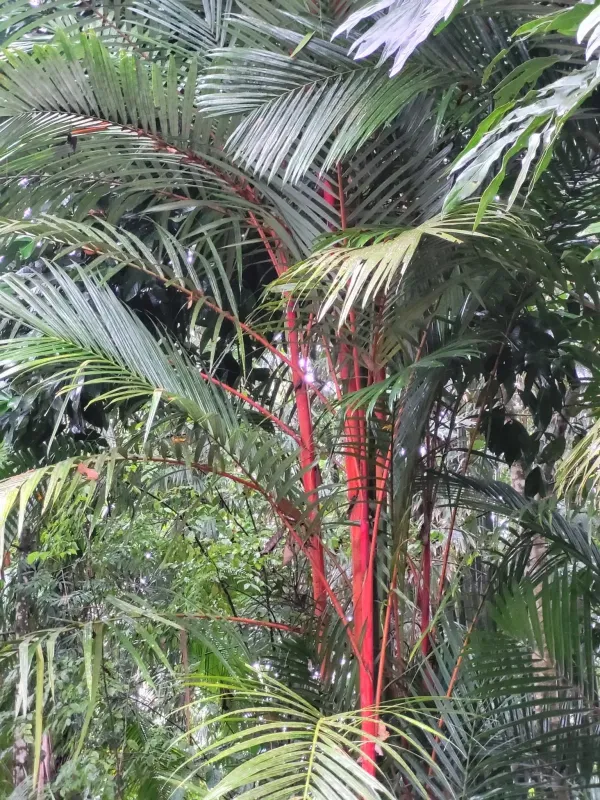
The Lipstick Palm (Cyrtostachys renda) is a distinctive species within the Arecaceae family. It is widely recognized for its vibrant, bright red crownshafts and stems, which make it one of the most sought-after ornamental palms in tropical landscaping.
Originating from the tropical rainforests of Southeast Asia, specifically Malaysia, Thailand, and Borneo, this palm thrives in naturally humid and swampy environments. It is a slow-growing plant that can form impressive, multi-stemmed clusters over several years.
Successful cultivation requires a tropical climate with temperatures consistently above 22°C. It is highly intolerant of cold drafts or frost, making it suitable only for greenhouses or heated indoor conservatories in temperate zones.
The soil must be kept moist at all times, mimicking the palm's natural habitat. A well-draining, peat-based mix rich in organic matter is recommended to prevent soil compaction while ensuring that the roots remain hydrated without becoming waterlogged.
High humidity levels are essential for the health of the fronds. Regular misting or the use of humidifiers is necessary, especially in indoor environments where heating systems tend to dry out the air, which can cause leaf tip necrosis.
Main diseases and pests
Common pests affecting Cyrtostachys renda include spider mites and mealybugs, which tend to infest the plant during periods of low environmental humidity. Preventive cleaning and maintaining high air moisture are the best control strategies.
Root rot is the most common physiological disorder caused by stagnant water or poor drainage. Ensuring the container has adequate drainage holes and using sterile growing media significantly reduces the risk of fungal infections in the root zone.