
Talipot palm
Corypha umbraculifera
Description
Growing requirements
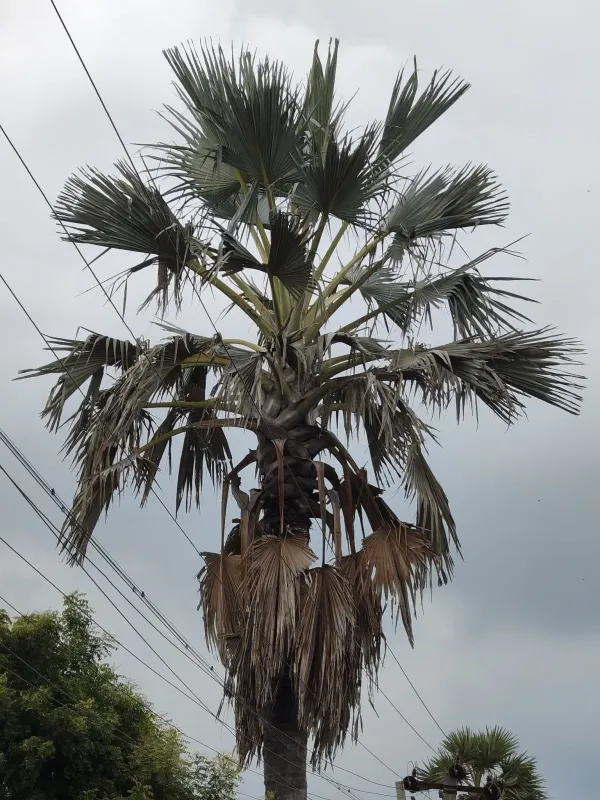
The Talipot palm (Corypha umbraculifera) is a prominent member of the Arecaceae family. It is recognized as one of the largest palm species in the world, characterized by its immense fan-shaped leaves and a massive, singular flowering event.
Originating from the tropical regions of Southern India and Sri Lanka, this palm thrives in high-temperature environments. It requires a stable tropical climate where humidity remains consistently high, reflecting its natural rainforest habitat.
Soil requirements include well-drained, nutrient-rich substrates. While the plant appreciates moisture, it is sensitive to waterlogged conditions, which can lead to rapid root decay if drainage is not properly managed in the planting area.
Full sun exposure is essential for the healthy development of this giant palm. Inadequate light during the juvenile stages often leads to stunted growth and structural weakness, making proper site selection a priority for agronomists.
Cultural practices include consistent monitoring of soil fertility and the provision of wind protection. Given its size, the palm requires significant space to allow its crown, which can span several meters, to fully expand.
Yield
The economic value of the Talipot palm is diverse. The leaves are traditionally used as durable roofing material and, historically, as a medium for writing ancient manuscripts. Their size and strength make them a highly valued agricultural product.
Starch production is a secondary but significant use. Before the palm reaches its flowering phase, the pith of the trunk is harvested to produce a high-quality starch, often referred to as a type of sago, which is a staple food resource.
The flowering process is the defining event of the tree's life. Being monocarpic, the palm directs all its stored energy into creating a massive inflorescence that can bear millions of flowers, followed by a large yield of fruits.
Once the seeds mature, the life cycle of the individual tree concludes. This mass release of seeds allows for the natural regeneration of the species and the collection of germplasm for nursery operations.
The overall yield of a palm plantation is calculated over a lifespan of 30 to 80 years, focusing on the maintenance of healthy vegetative growth to ensure maximum leaf production before the onset of the reproductive stage.
Main diseases and pests
Palm weevils represent the most severe pest threat to this species. These insects bore into the trunk, potentially causing structural collapse. Regular visual inspections are mandatory to identify and treat infestation points early.
Fungal infections, such as bud rot or root rot, frequently occur when soil aeration is poor. Maintaining a balance between sufficient moisture and proper drainage is the most effective preventative measure against these pathogens.
Nutrient deficiencies, particularly involving magnesium and potassium, can manifest as chlorosis on the leaves. A regular fertilization program, based on soil analysis, is necessary to prevent premature leaf decline and weakening of the plant.
Mechanical stress caused by high winds can tear the large, heavy fronds. While this is a natural part of the plant's environment, secondary infections can enter through these tears, requiring prompt monitoring after storm events.
Soil-borne pests like nematodes can impact the root system of young palms, leading to reduced vigor. The use of organic soil amendments and crop rotation strategies in nurseries can help mitigate these threats.