
Corypha utan
Corypha utan
Description
Growing requirements
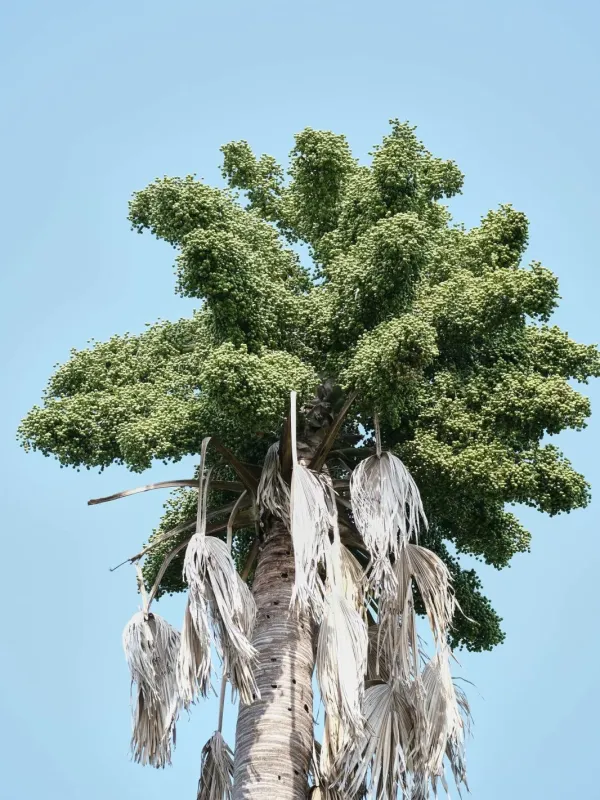
Corypha utan belongs to the Arecaceae family. This powerful woody plant is widely known as a fan palm. In its natural habitat, it reaches impressive sizes, forming a massive trunk that can grow up to 20 meters in height.
The plant prefers humid tropical conditions and well-drained, nutrient-rich soils. The optimal temperature range for the development of this palm is between +22 and +30 degrees Celsius, as the species is extremely sensitive to frost.
Its natural range covers Southeast Asian countries, including India, Indonesia, the Philippines, and Northern Australia. It is frequently found in coastal forests, on plains, and near river deltas, where humidity levels remain consistently high throughout the year.
Botanically, the crop is remarkable for its unique flowering cycle. It is a monocarpic plant: it flowers only once in its lifetime, after which it fruits and dies. The inflorescence of the Corypha is among the largest of any plant in the world.
The economic value of Corypha utan is multifaceted. Its leaves are traditionally used for weaving baskets, making shelters, headwear, and even as a writing material in historical manuscripts. Additionally, starchy substance known as sago is extracted from the trunk, serving as a vital carbohydrate source for local populations.
Main diseases and pests
The main threats to Corypha plantations are insect pests, such as the palm weevil, which can rapidly destroy an adult tree by damaging the internal tissues of the trunk.
Under conditions of high humidity, plants may suffer from fungal infections causing root rot or leaf spots. Prevention involves maintaining optimal air circulation and avoiding waterlogging of the root zone.