
Bread flower
Vallaris solanacea
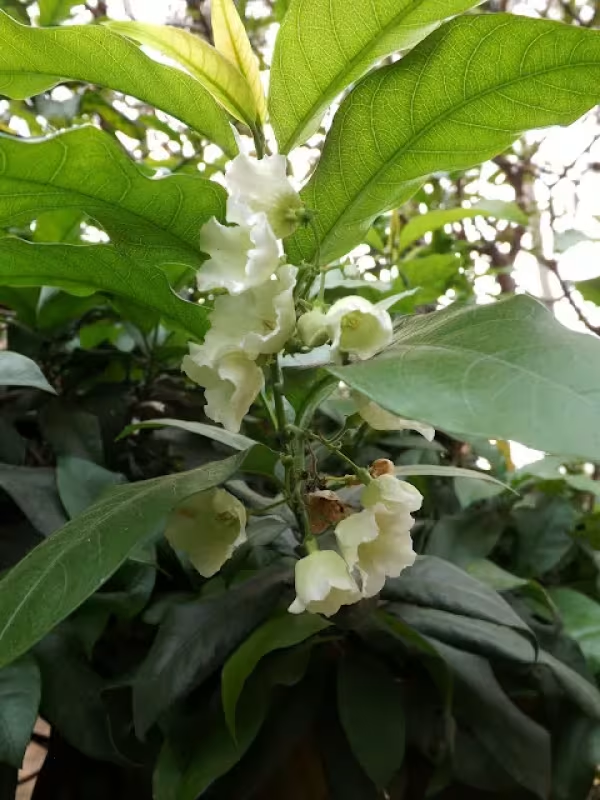
Description
Growing requirements
Vallaris solanacea, commonly known as Bread flower, is a woody climbing plant belonging to the Apocynaceae family. Native to the tropical regions of South and Southeast Asia, it is highly valued for its fragrant, bell-shaped flowers.
The plant thrives in warm, humid tropical climates. It requires full sunlight to partial shade for optimal growth and high-quality floral production. Soil should be well-drained, fertile, and rich in organic matter to support vigorous vine development.
In terms of agricultural management, the Bread flower requires sturdy trellising systems to accommodate its climbing habit. Regular pruning is essential to maintain a desired shape and to encourage the emergence of new flowering branches.
Watering schedules must be consistent during the growing season, ensuring that the soil remains moist but never waterlogged. During winter months, the plant benefits from a slightly drier environment and protection from temperatures below 10-12°C.
Propagation is typically performed via cuttings or seeds. Young plants require specialized care in nursery conditions, including steady temperatures and protection from harsh environmental stressors until they are well-established.
Main diseases and pests
Common pests affecting Vallaris solanacea include spider mites and mealybugs, especially in indoor environments where air circulation may be limited. These insects suck sap from the leaves, causing chlorosis and weakening the vine.
Root rot caused by fungal pathogens is a significant threat when soil drainage is poor. Overwatering is the primary cause of such issues, necessitating a balanced approach to irrigation management.
The plant's sap is known to be toxic, which provides some natural defense against herbivores. However, it can cause skin irritation in humans and pets, requiring careful handling during maintenance and pruning activities.
Poor lighting conditions often lead to etiolation, making the stems thin and fragile. This physiological stress makes the plant more susceptible to opportunistic infections and pests.
Integrated pest management strategies should be applied to keep the plant healthy. Regular monitoring and maintaining proper humidity levels help prevent the onset of infestations and common fungal diseases in a controlled environment.