
Bread Flower
Vallaris glabra
Description
Growing requirements
Bread Flower (Vallaris glabra) is a woody vine belonging to the Apocynaceae family. Native to Southeast Asia, this species thrives in tropical rainforest environments, where it climbs to significant heights provided that adequate structural support is available for its vigorous growth.
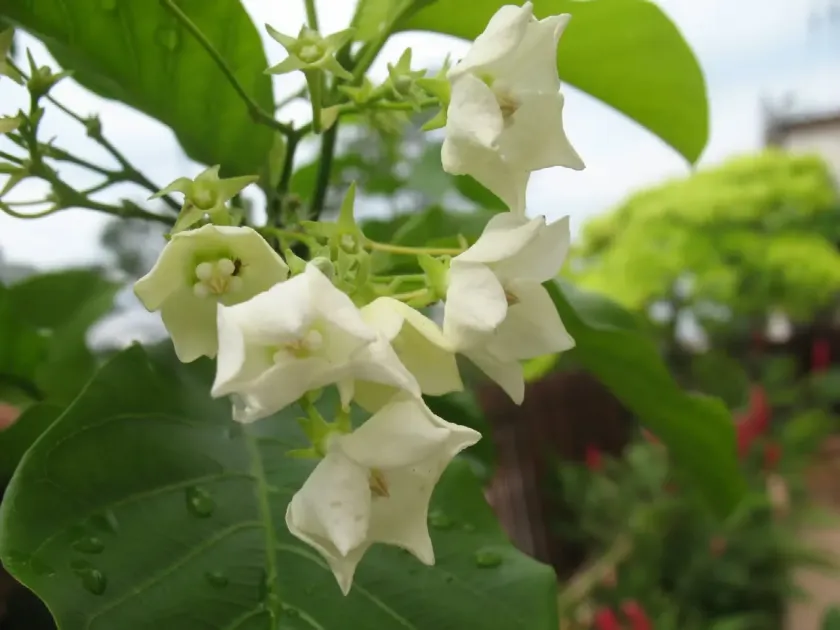
Botanically, the plant is identified by its opposite, leathery, and glossy leaves. Its flowers grow in loose clusters, appearing as striking white blossoms that emit an intense, pleasant aroma reminiscent of fresh bread or jasmine, a trait that makes it a popular choice for tropical landscape projects.
Successful cultivation of Vallaris glabra requires consistently warm temperatures and high humidity levels. The plant is highly sensitive to frost, which limits its outdoor growth to tropical climates; in cooler regions, it must be grown in conservatories or as a container plant moved indoors during winter.
Soil requirements dictate the use of loose, well-draining media with a neutral to slightly acidic pH. It is crucial to prevent waterlogging at the root zone, as the plant's root system is susceptible to rot in saturated conditions, regardless of its preference for high atmospheric humidity.
Cultural practices include regular pruning to maintain the vine's structure and encourage more prolific flowering. During the active growth phase, the plant requires balanced liquid fertilizers and a sturdy trellis to facilitate vertical climbing, ensuring its ornamental potential is fully realized.
Main diseases and pests
The primary threats to Vallaris glabra include sap-sucking pests like spider mites and mealybugs, which thrive in the low-humidity conditions often found in indoor environments.
Improper watering routines coupled with poor air circulation can predispose the vine to fungal infections, leading to root rot and noticeable leaf spotting.
Effective disease management involves maintaining optimal microclimate conditions, regular inspection of the leaf undersides, and the timely application of appropriate insecticides.
Systemic fungicides are recommended upon the first sign of fungal infestation to mitigate the risk of spreading the pathogen to other nearby plants.
Monitoring water quality is essential, as the accumulation of dissolved salts in the potting medium can weaken the plant's resistance to common environmental stressors.