
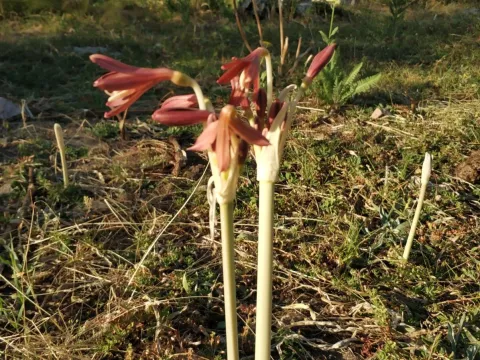
Ungernia
Ungernia
Reproduction of Ungernia in cultivation is most often carried out by vegetative methods using daughter bulbs, which allows for a faster yield of raw materials.
What the section contains


Ungernia
Seed propagation is used less frequently due to the long growth period required for seedlings to reach a productive age suitable for harvesting.
The optimal time for planting bulbs is in the autumn, when the soil is still warm enough to promote rooting before the onset of hard frost.
When sowing seeds, prepared substrates in protected soil are used to ensure stable temperature and moisture levels for successful germination.
The planting depth for bulbs depends on their size and soil composition, typically ranging from 5 to 10 centimeters to ensure healthy development.
Ungernia belongs to the Amaryllidaceae family and is a perennial bulbous plant native to the mountain regions of Central Asia.
The crop has specific soil requirements: it must be light, well-drained, and have a neutral or slightly alkaline pH level.
This plant is light-loving, so industrial cultivation requires open, well-lit areas without standing groundwater to prevent root rot.
During the active growing season, Ungernia requires moderate watering, but during the summer dormancy period, excess moisture is detrimental.
Climatic conditions should match the mountain-type climate with distinct seasons, as the plant is adapted to cycles of heat and cold.
The economic use of Ungernia focuses on the extraction of valuable alkaloids, particularly lycorine, which is present in all parts of the plant.
The primary raw material for the pharmaceutical industry is the bulbs, which accumulate the highest concentration of active ingredients at maturity.
The yield of raw material depends on the age of the plantation, as alkaloid accumulation occurs gradually over several years of growth.
To maintain stable plantation productivity, planned replacement of older bulbs with young specimens is carried out within a crop rotation system.
The quality of the harvest is assessed based on the total alkaloid content, which requires strict control over growth conditions and harvest timing.
The main threats to Ungernia cultivation are fungal diseases that develop in conditions of high humidity and poor soil drainage.
Basal rot of the bulbs is the most dangerous pathology, capable of destroying a significant part of the plantation in a short time.
Pests such as onion flies and nematodes cause the most damage, injuring the underground parts of the plant and allowing infections to take hold.
Disease prevention includes the use of healthy planting material and strict adherence to watering regimes during the dormancy phase.
In case of pest or pathogen infestation, specialized fungicides and insecticides approved for medicinal crops are applied.
The harvesting of Ungernia bulbs is performed after the end of the growing season, when the aerial parts wither and nutrients redistribute to the bulbs.
The harvesting process requires care to avoid mechanical damage to the bulbs, as micro-traumas can lead to rot during storage.
The harvested crop undergoes primary cleaning from soil and root residues, followed by drying under controlled temperature conditions.
Storage of the raw material must take place in dry, well-ventilated rooms, excluding direct sunlight and temperature fluctuations.
Strict adherence to collection and post-processing protocols ensures the preservation of the chemical composition required for pharmaceutical production.