
Tulbaghia simmleri
Tulbaghia simmleri
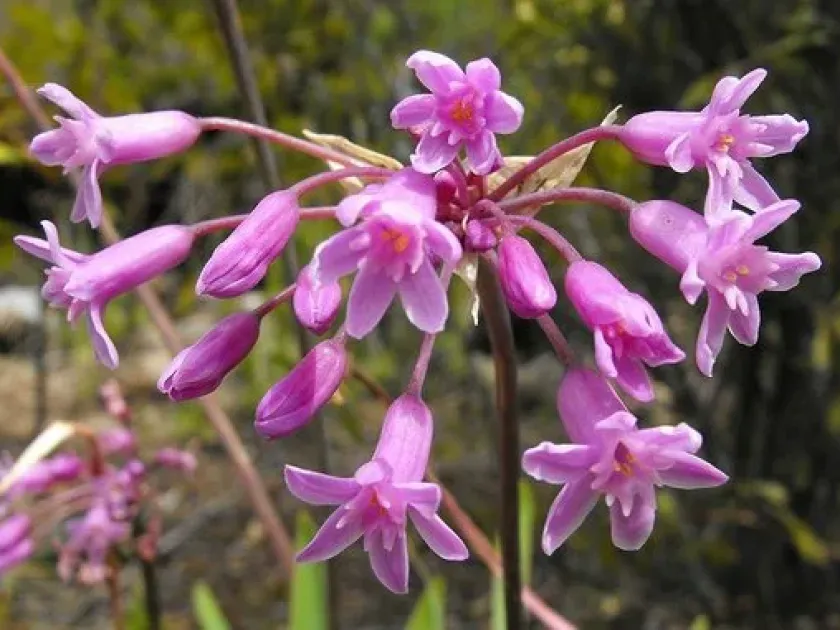
Description
Growing requirements
Tulbaghia simmleri is a perennial herbaceous plant belonging to the Amaryllidaceae family. Originating from South Africa, this species is well-adapted to Mediterranean-like climates where sun exposure is abundant.
The plant features slender, grass-like leaves forming a basal rosette and produces clusters of pale pink, sweet-scented flowers. It is widely valued for both its aesthetic appeal and its distinct culinary applications similar to garlic or chives.
To thrive, Tulbaghia requires full sun exposure and well-draining, nutrient-rich soil. It is crucial to prevent waterlogging, as the fleshy roots are highly susceptible to rot if maintained in permanently saturated conditions.
In terms of temperature, it prefers mild conditions and requires frost protection in colder regions, often necessitating cultivation in pots that can be moved indoors during extreme winter weather.
Agricultural management involves routine weeding, consistent but moderate irrigation during the growing season, and periodic fertilization with balanced NPK formulations to support vegetative development.
Main diseases and pests
Root and crown rot are the primary threats to this crop, usually triggered by poor drainage or excessive soil moisture, leading to the rapid decay of the rhizomatous system.
Pests such as aphids and spider mites can infestation the foliage, especially in greenhouse environments or during hot, dry spells, which necessitates an integrated pest management strategy.
Gastropods, including slugs and snails, are known to feed on the succulent leaves of the plant, often causing significant aesthetic and structural damage during the early growth stages.
Regular monitoring of plant health is essential to identify early signs of fungal pathogens, which can be mitigated through improved air circulation and the application of suitable fungicides.
Sustainable cultivation practices, such as choosing high-quality planting material and maintaining soil hygiene, are vital to preventing the spread of diseases and ensuring consistent crop vigor.