
Psilocaulon rogersiae
Psilocaulon rogersiae
Description
Growing requirements
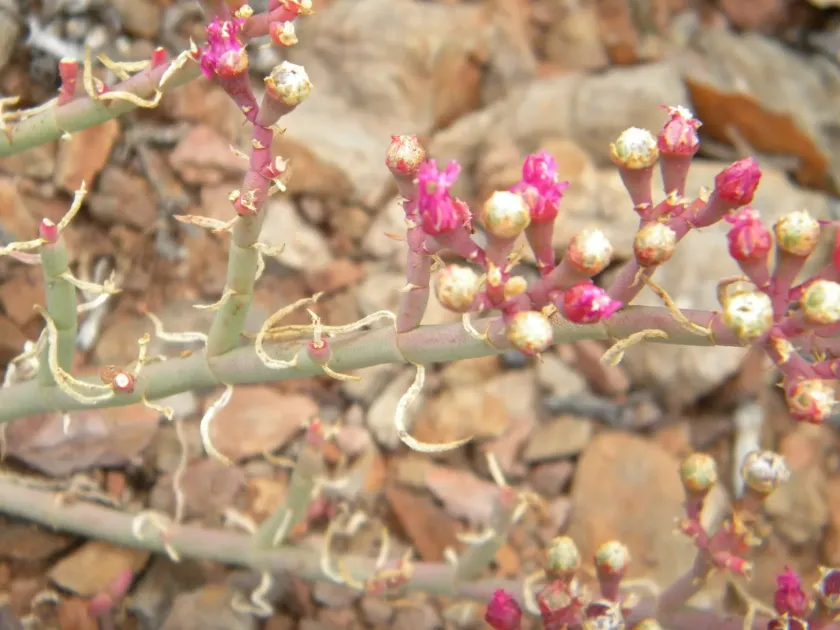
Psilocaulon rogersiae is a succulent subshrub belonging to the Aizoaceae family. This plant is adapted to the extreme conditions typical of the arid regions of Southern Africa, where it demonstrates exceptional resilience against adverse abiotic environmental factors.
Botanically, the crop is characterized by fleshy, segmented stems capable of storing significant amounts of moisture to survive during prolonged drought periods. The plant possesses a robust root system capable of efficiently extracting water from deep soil layers under harsh desert climate conditions.
The primary requirement for cultivation is the presence of well-drained, often sandy or loamy soils with high salt content. As a halophyte, Psilocaulon thrives in saline substrates where most conventional agricultural crops would succumb to osmotic stress.
For optimal development, the plant requires high solar radiation levels and must be kept free from waterlogging in the root zone. Ideal temperature ranges for active vegetative growth are between +20°C and +35°C, and the culture is capable of withstanding significant daily temperature fluctuations.
From an agricultural perspective, this plant is viewed as a promising crop for the phytoremediation of degraded saline lands and for biomass production in areas with limited freshwater resources. Due to its biological resilience, it serves as a critical component for restoring degraded rangelands in arid environments.