
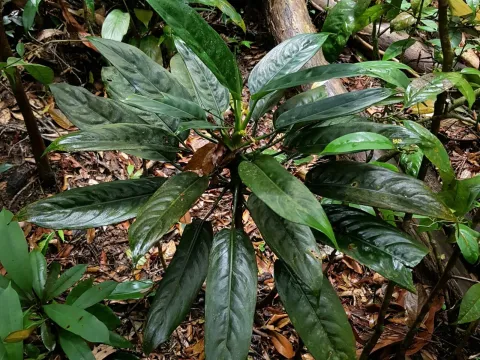
Aglaonema simplex
Aglaonema simplex (Blume) Blume
Aglaonema simplex is a perennial herbaceous plant belonging to the Araceae family. Native to the tropical regions of Southeast Asia, this species typically thrives in the understory of dense forests, adapted to low-light conditions.
What the section contains
Aglaonema simplex
The plant features upright stems with lance-shaped leaves, providing high ornamental value. Its botanical structure allows it to accumulate moisture, but it is highly dependent on environmental stability to maintain its physiological balance.
Climate requirements for successful cultivation include a consistent temperature range between 20°C and 25°C. Exposure to temperatures below 15°C can cause significant metabolic disruption and damage the foliage.
Soil quality is paramount; the plant requires a well-draining, slightly acidic substrate. A mixture of peat, perlite, and bark is ideal for maintaining the necessary aeration around the roots while preventing waterlogging.
The cultivation practice demands high humidity levels. In commercial or residential setups, maintaining humidity above 60% is essential to prevent leaf edge browning and to ensure consistent growth rates throughout the year.
Spider mites are the most frequent threat to Aglaonema simplex, especially in environments with poor ventilation and low humidity. These pests feed on sap, causing the foliage to lose its natural luster and develop mottled spots.
Mealybugs are another common challenge, often hiding in the leaf axils. Their presence can be managed by manual removal or the application of horticultural oils, provided they are detected during the early stages of infestation.
Fungal leaf spot diseases may occur when excess moisture persists on the leaves for extended periods. Ensuring good air circulation is a critical management strategy to minimize the risk of such infections.
Root rot is a major agronomic concern resulting from overwatering or poorly draining soil media. Once the root system is compromised, the plant struggles to recover, making prevention through drainage control the best solution.
- Regular inspection for early signs of pests
- Sanitation of pruning tools
- Quarantine of new plant arrivals
- Proper monitoring of substrate moisture
- Use of certified pathogen-free soil mixes