
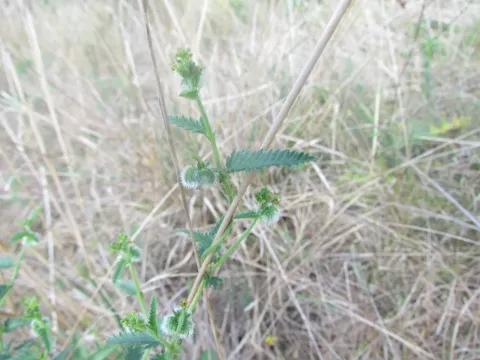
Tragia
Tragia
Tragia is a genus of perennial herbs and shrubs belonging to the Euphorbiaceae family. These plants are native to tropical and warm temperate regions across the Americas, Africa, and Asia, showing significant adaptation to diverse environmental conditions.
What the section contains
 Tragia benthamii
Tragia benthamii
Tragia benthamii
 Tragia betonicifolia
Tragia betonicifolia
Tragia betonicifolia
 Tragia cannabina
Tragia cannabina
Tragia cannabina
 Tragia involucrata
Tragia involucrata
Tragia involucrata
 Tragia mercurialis
Tragia nepetaefolia
Tragia nepetaefolia
Tragia mercurialis
Tragia mercurialis
Tragia nepetaefolia
Tragia nepetaefolia
 Tragia okanyua
Tragia plukenetii
Tragia plukenetii
Tragia okanyua
Tragia okanyua
Tragia plukenetii
Tragia plukenetii
 Tragia ramosa
Tragia ramosa
Tragia ramosa
 Tragia senegalensis
Tragia spathulata
Tragia spathulata
Tragia senegalensis
Tragia senegalensis
Tragia spathulata
Tragia spathulata
 Tragia volubilis
Tragia volubilis
Tragia volubilis
Tragia
The botanical signature of Tragia is the presence of stinging hairs distributed across stems and leaves. Similar to stinging nettle, these hairs act as a chemical defense mechanism, secreting irritants when touched by herbivores.
Cultivation requires well-drained, fertile soil with a slightly acidic to neutral pH. Proper soil structure is essential, as the root systems are highly sensitive to waterlogging, which often leads to rapid decay in heavier clay soils.
The crop thrives in full sun, requiring significant light exposure to maintain healthy foliage and regular growth cycles. In regions with colder winters, Tragia is often cultivated as an annual or managed in greenhouse environments to prevent freeze damage.
Agronomic management involves periodic irrigation tailored to soil moisture levels rather than a fixed schedule. Fertilization with balanced NPK fertilizers is recommended during the peak growing season to ensure sustained biomass production.
Root rot is the most significant pathological threat to Tragia, primarily caused by fungal pathogens such as Phytophthora. These conditions are exacerbated by poor soil drainage and excessive humidity levels around the root zone.
Spider mites represent the main pest concern, particularly in greenhouse or protected cultivation settings. These pests thrive in dry air conditions and can cause significant foliage damage if early detection and treatment are neglected.
Powdery mildew may manifest as a white, powdery coating on leaf surfaces under conditions of poor ventilation and fluctuating temperatures. Maintaining proper spacing between plants is a critical preventive measure to ensure adequate air circulation.
While the stinging hairs provide a natural barrier against many leaf-eating insects, they do not fully protect the plant from viral pathogens. Managing potential insect vectors like aphids is vital for preventing the spread of systemic viral diseases.
Integrated pest management strategies should focus on crop rotation and the use of selective biological pesticides to maintain ecological balance while protecting the crop's integrity throughout its developmental cycle.