
Three-thorned spurge
Euphorbia triaculeata
Description
Growing requirements
Euphorbia triaculeata is a unique succulent species belonging to the Euphorbiaceae family. Native to the arid regions of Africa, specifically parts of Ethiopia, this plant has evolved to thrive in environments with limited water availability and high solar radiation.
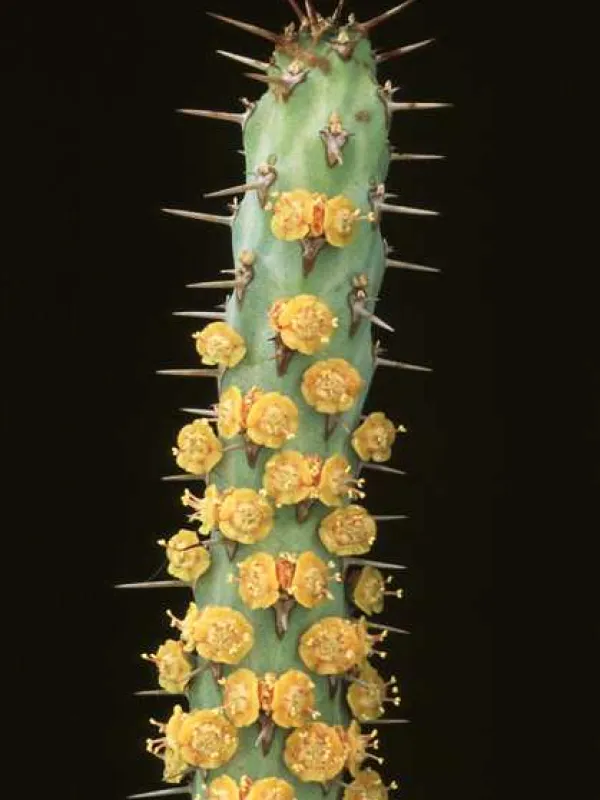
The morphology of the plant is defined by its succulent, ribbed stems which are armed with distinct thorns arranged in pairs or trios. These structures are vital for moisture storage and physical defense against herbivores in their natural habitat.
Successful cultivation requires high light intensity. If kept indoors, it should be placed in areas receiving direct sunlight for at least six hours daily to maintain its structural integrity and prevent stunted, pale growth.
The growing medium must be highly porous. A professional recommendation is to use a mixture of inorganic materials like coarse sand, pumice, or perlite combined with a small portion of peat or organic compost to ensure perfect drainage.
Watering should be deep but infrequent. The substrate must be allowed to dry out completely between waterings to prevent the development of physiological disorders associated with waterlogged root systems.
Main diseases and pests
Fungal pathogens represent the most significant threat to Euphorbia triaculeata. Root and stem rot are common consequences of overwatering, particularly during the winter dormancy period when the plant's metabolic activity is significantly reduced.
Mealybugs are the most persistent pests encountered in the greenhouse environment. They tend to hide in the crevices near the spines, where they sap the plant's nutrients and secrete honeydew, which may attract sooty mold.
Spider mites are another concern, especially when ambient humidity is consistently low. Infestations typically appear on the youngest parts of the stems, leading to yellowing and a decline in the plant's overall vigor.
Integrated pest management suggests regular visual monitoring of the stems and the use of mechanical removal methods for small populations. Cleanliness in the workspace is paramount to preventing the spread of diseases.
When applying chemical treatments, ensure that the chosen insecticide or fungicide is formulated for succulent use to avoid phytotoxicity. Always follow the product label instructions carefully to protect the plant's sensitive outer tissue.