
Transtagana spurge
Euphorbia transtagana
Description
Growing requirements
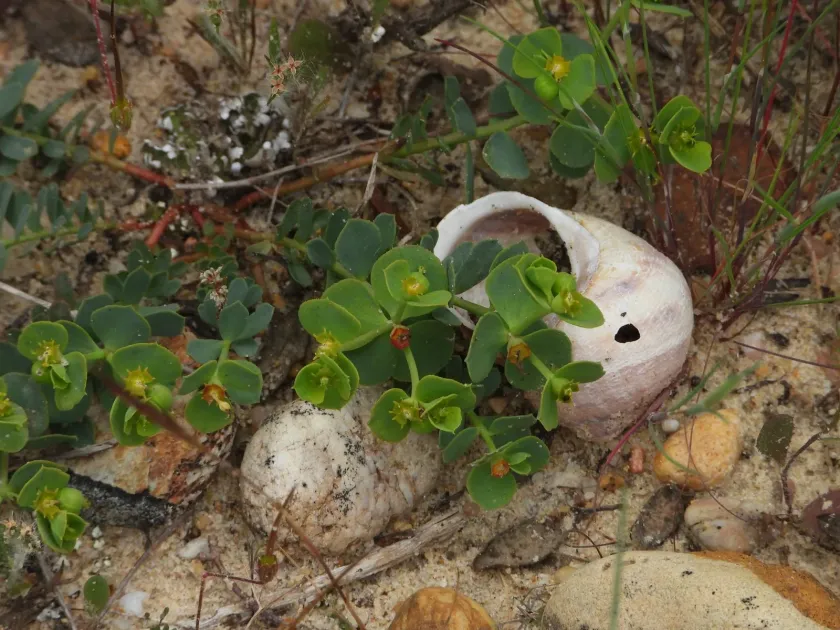
Transtagana spurge (Euphorbia transtagana) is a perennial herbaceous plant belonging to the Euphorbiaceae family. It is a regional species native to the Iberian Peninsula, specifically adapted to the arid and semi-arid landscapes of Portugal.
The plant thrives in Mediterranean climates, exhibiting exceptional tolerance to drought and high thermal regimes. It naturally occupies habitats characterized by sandy or gravelly soils with excellent drainage, which is essential for maintaining the health of its root system.
Botanically, this species is noted for its high content of latex containing various terpenes and hydrocarbons. The structure of the plant, featuring a deep taproot and thick, succulent-like tissues, allows it to survive in environments where traditional crops would fail to grow.
When cultivated, the plant requires minimal input regarding fertilizers but relies heavily on soil porosity. It avoids compacted soils and requires a pH range that typically matches the alkaline to neutral conditions of its native territory.
As an industrial crop, Euphorbia transtagana is studied as a source of renewable bio-oils. Its ability to grow on degraded, poor-quality lands makes it a promising candidate for sustainable agriculture and biofuel production, minimizing competition for arable farming areas.
Main diseases and pests
The primary health threats to Transtagana spurge involve fungal pathogens, particularly those that thrive in moisture-saturated environments. Root rot caused by Pythium and Phytophthora species can devastate plantations if the irrigation system is poorly managed.
Insect pests pose a chronic challenge, with various aphid species frequently targeting the nutrient-rich succulent stems. Heavy infestations lead to stunted growth and reduced vigor, which is critical during the plant's vegetative establishment phase.
Spider mites are another major concern, especially in warm, dry settings where the plant's defense mechanisms might be weakened. These pests damage the epidermal layers of the leaves, hindering the photosynthesis process required for biomass accumulation.
Integrated pest management strategies are crucial for sustainable production. This includes maintaining proper plant spacing to prevent high humidity pockets and employing biological control agents to manage aphid populations without chemical overuse.
Routine field monitoring is the best defense against localized outbreaks of disease. By identifying the early signs of infection or infestation, growers can apply targeted corrective actions before damage becomes widespread across the crop field.