
Tragia plukenetii
Tragia plukenetii
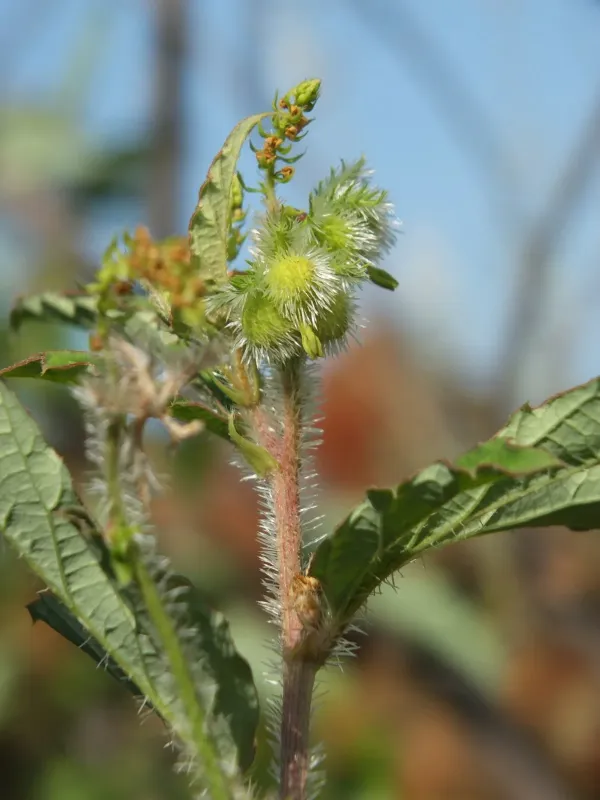
Description
Growing requirements
Tragia plukenetii is a perennial herbaceous species belonging to the family Euphorbiaceae. The plant is botanically distinguished by its stinging hairs, which act as a defense mechanism against herbivorous animals in its native tropical environment.
The origin of this species is traced to tropical regions of Asia and Africa. It thrives in warm climates where temperatures remain consistently high throughout the year, allowing for continuous metabolic activity and growth.
Cultivation requires well-drained soil types, as the root system is highly sensitive to hypoxia caused by waterlogging. A neutral to slightly acidic pH is ideal for nutrient uptake, supporting the plant's development and the synthesis of secondary metabolites.
In terms of light exposure, Tragia plukenetii prefers bright, diffuse sunlight. While it can survive in partial shade, optimal growth rates and maximum biomass production are achieved under full sun conditions in warm regions.
The plant has significant ethnobotanical importance. Its medicinal properties, often linked to anti-inflammatory and antiseptic effects, make it a subject of interest for both traditional medicine and pharmacological research.
Main diseases and pests
Root rot is a major threat to the crop, predominantly caused by fungal pathogens such as Pythium or Phytophthora. Improving soil drainage is the most effective preventative measure against these soil-borne diseases.
Aphids and spider mites are common pests that colonize the leaves. These insects cause stunted growth and nutrient loss, necessitating integrated pest management strategies to protect the crop quality.
Fungal leaf spot diseases occur frequently in high-humidity climates. Proper air circulation and spacing between individual plants are crucial to reduce the prevalence of these airborne pathogens.
Root-knot nematodes can severely inhibit the plant's growth by attacking the roots, leading to reduced vigor. Soil solarization or the use of resistant crop varieties is recommended in areas with known nematode infestations.
Viral infections transmitted by whiteflies or thrips require strict control of vector populations. Eliminating weeds that may serve as alternative hosts for these viruses is a standard practice in maintaining plantation health.