
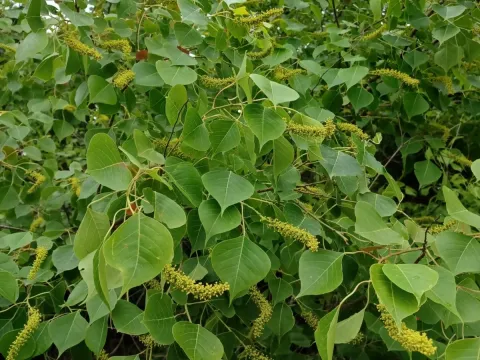
Triadica
Triadica
Triadica, commonly referred to as the Chinese tallow tree, is a perennial crop that requires precise timing for successful establishment.
What the section contains


Triadica
Seeds should be sown in well-prepared, friable soil once the threat of late spring frosts has completely passed to ensure optimal germination.
Large-scale plantations often prefer planting established nursery saplings, which significantly improves the survival rate and uniformity of the crop.
Seed stratification is recommended to break dormancy and increase the germination percentage, especially in temperate cultivation zones.
Correct spacing is essential, as the trees require ample sunlight and good air circulation to reach their maximum production potential.
As a member of the Euphorbiaceae family, Triadica thrives best in warm, humid climates characteristic of tropical and subtropical regions.
The plant is highly adaptable to various soil types, including poor or saline soils, though deep, well-drained loamy soils yield the best results.
Adequate irrigation is crucial during the early stages of growth and during fruit formation to ensure high oil content in the seeds.
The species prefers neutral to slightly acidic pH levels; therefore, soil analysis should be performed prior to large-scale plantation layout.
Protection from high-velocity winds is necessary to prevent physical damage to the spreading canopy and to maintain overall plant health.
The primary economic output of Triadica is its seeds, which are coated in a high-quality vegetable tallow used for industrial candle making.
Proper nutrient management, including balanced nitrogen and potassium applications, is essential to maximize annual seed production.
The oil extracted from the seeds is highly valued for its chemical stability, making it an excellent feedstock for sustainable biodiesel production.
Consistent yields are expected throughout the productive life of the tree, provided that the plantation receives regular maintenance.
Harvesting efficiency depends on the maturity of the trees, with peak production often occurring once the canopy is fully developed.
High humidity and poor ventilation within the canopy can lead to various fungal pathogens that affect fruit quality and overall yield.
Leaf-eating insects and certain species of mites represent the most common pests that can hinder the photosynthetic capacity of the trees.
Integrated pest management strategies are recommended to maintain ecological health while effectively controlling problematic insect populations.
Regular monitoring for nutrient deficiencies, which may present as chlorosis, helps in applying timely corrective fertilization measures.
Sanitation practices, such as removing infected branches and fallen leaves, are vital for reducing the risk of disease spread within the orchard.
Harvesting usually commences once the seed capsules naturally split open, exposing the white, waxy seeds ready for collection.
Mechanical harvesting tools can be utilized to shake the trees or gather fallen seeds, though manual collection remains common for smaller plots.
Immediate post-harvest drying is essential to prevent moisture-related spoilage and ensure that the vegetable tallow remains stable.
The processing stage involves separating the wax from the inner kernel, as both components have distinct industrial applications.
Proper storage conditions, characterized by low humidity and cool temperatures, protect the quality of the harvested seeds until industrial processing.