
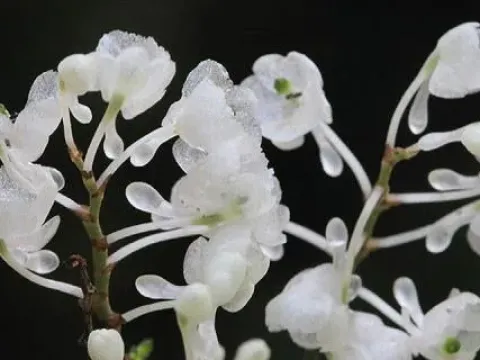
Rhipidoglossum
Rhipidoglossum
Rhipidoglossum is a genus of epiphytic orchids belonging to the family Orchidaceae. Native to the tropical regions of Africa, these plants naturally inhabit the branches and trunks of trees, where they have evolved to thrive in high-humidity environments.
What the section contains

Rhipidoglossum
Botanically, Rhipidoglossum is distinguished by its short, often woody stems and distichous, leathery leaves. The root system is highly efficient at absorbing moisture and nutrients from the ambient air and the decaying organic material on tree bark.
For successful cultivation, a high level of humidity (above 70%) is essential. These plants require a stable environment with temperatures typically ranging between 18°C and 25°C, ensuring that the roots do not experience extreme temperature fluctuations.
Lighting requirements are specific: they prefer bright, indirect light, mimicking the dappled sun conditions found in the tropical forest canopy. Too much direct sunlight can cause rapid leaf dehydration and irreversible tissue damage.
The choice of potting medium is critical for aeration. Using a mix of coarse orchid bark, perlite, and charcoal allows for the necessary airflow to the roots while maintaining enough moisture to support the plant between irrigation cycles.
Fungal infections and root rot are the primary threats to Rhipidoglossum, usually caused by overwatering or stagnant air. Ensuring proper drainage in the potting vessel is the most effective preventative measure against these pathogens.
Mealybugs are common pests that tend to hide in the tight leaf axils, making them difficult to detect. Early identification and the use of targeted insecticide treatments are necessary to prevent infestations from compromising the plant's health.
Spider mites can become a problem if the ambient humidity drops below recommended levels for an extended period. These pests extract sap, leading to stunted growth and leaf yellowing, which requires immediate humidity adjustment.
Scale insects present another challenge, attaching themselves to the leaves and stems. Their hard protective shells make them resistant to standard contact sprays, so systemic insecticides or manual removal are often required.
Maintaining a clean growing environment and periodically inspecting the undersides of the leaves are crucial practices for the long-term health and vigor of your Rhipidoglossum collection.