
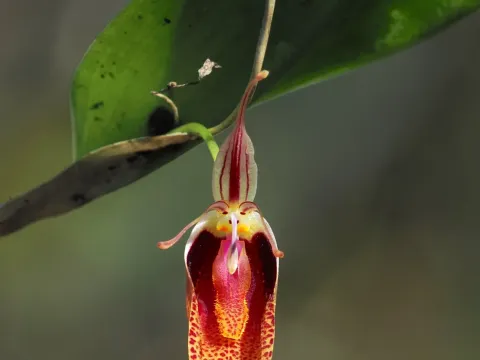
Restrepia
Restrepia
Restrepia is a genus of epiphytic orchids belonging to the Orchidaceae family. These plants originate from the humid mountain forests of Central and South America, where they grow primarily on tree trunks and branches under conditions of high humidity and moderate temperatures.
What the section contains

Restrepia
In cultivation, Restrepia requires conditions as close to natural as possible: consistently high air humidity (70% and above) and good air circulation. The temperature regime should be moderately cool, as most species do not tolerate heat above 25°C well.
Planting is carried out in substrates that ensure excellent drainage and aeration of the root system. Typically, mixtures based on pine bark, charcoal, and sphagnum moss are used, which allow the roots to access oxygen and the necessary amount of moisture without the risk of waterlogging.
Lighting for Restrepia must be diffused, avoiding direct sunlight, which can cause burns on the delicate leaves. Eastern or western windows with shading are ideal, and in greenhouse conditions, artificial lighting of moderate intensity should be employed.
Watering requires special attention: the substrate should remain slightly moist at all times, but full immersion of the roots in water is unacceptable. Using soft, settled water at room temperature is the key to the plant's successful development and the prevention of substrate salinization.
The main threats to Restrepia are insect pests such as mealybugs, spider mites, and scale insects, which actively multiply in conditions of high humidity and stagnant air.
Fungal and bacterial diseases, caused by excessive waterlogging of the substrate or insufficient ventilation, can lead to the development of root system rots and damage to leaf blades.
To combat pests, regular inspection of the plant and the application of specialized insecticides and acaricides approved for use on orchids are recommended.
Disease prevention consists of monitoring the quality of irrigation water, adhering to proper ventilation schedules, and maintaining cleanliness around plant containers.
In case of fungal infections, it is necessary to promptly remove damaged areas and treat the cut surfaces with fungicides to prevent the spread of spores throughout the entire specimen.