
Rhynchostylis gigantea
Rhynchostylis gigantea
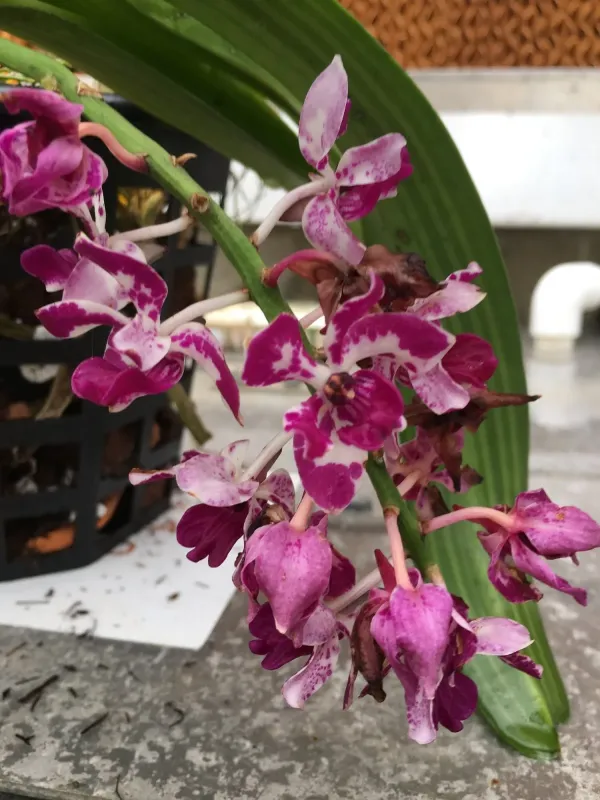
Description
Growing requirements
Rhynchostylis gigantea is an epiphytic orchid species belonging to the family Orchidaceae. Native to Southeast Asia, specifically countries like Thailand and Vietnam, it grows in humid tropical forest environments on tree branches.
Cultivation requirements necessitate high ambient humidity (around 70-80%) and temperatures ranging from 22°C to 30°C. Stable environmental conditions are crucial, as significant fluctuations can cause physiological stress and inhibit flower spike formation.
The substrate must be highly breathable and porous to allow rapid drying of the roots. A standard mix typically includes large-grade fir bark, charcoal, and small pieces of sphagnum moss. Drainage is the most important factor in preventing root rot.
This species requires bright, indirect light to thrive and produce its signature inflorescences. While it enjoys high-intensity lighting, direct sunlight during peak hours can damage the leaves, resulting in permanent necrotic patches.
Its primary use is in ornamental horticulture and botanical conservation. Breeders often utilize this species for its fragrant, long-lasting flowers to develop resilient hybrids that can adapt to broader indoor conditions.
Main diseases and pests
The most common disease threat is root and crown rot, primarily caused by water accumulation in the leaf axils or poor substrate drainage. Prevention relies on ensuring adequate airflow around the plant base.
Insect pests, including mealybugs, scale insects, and spider mites, can severely affect the plant's health. They tend to congregate under leaves or near the roots, extracting essential nutrients and weakening the orchid's resistance.
Regular maintenance involves checking for signs of infestation and applying horticultural oils or systemic insecticides. Infected plants should be isolated immediately to prevent the rapid spread of pests through the collection.
Fungal leaf spot is another frequent issue occurring in low-ventilation environments. Maintaining a consistent air current is essential to ensure that foliage dries off properly after irrigation cycles.
Consistent monitoring and providing the correct environmental balance are the best defenses against biological threats. Healthy, well-nourished plants show significantly higher resistance to common tropical pests.