
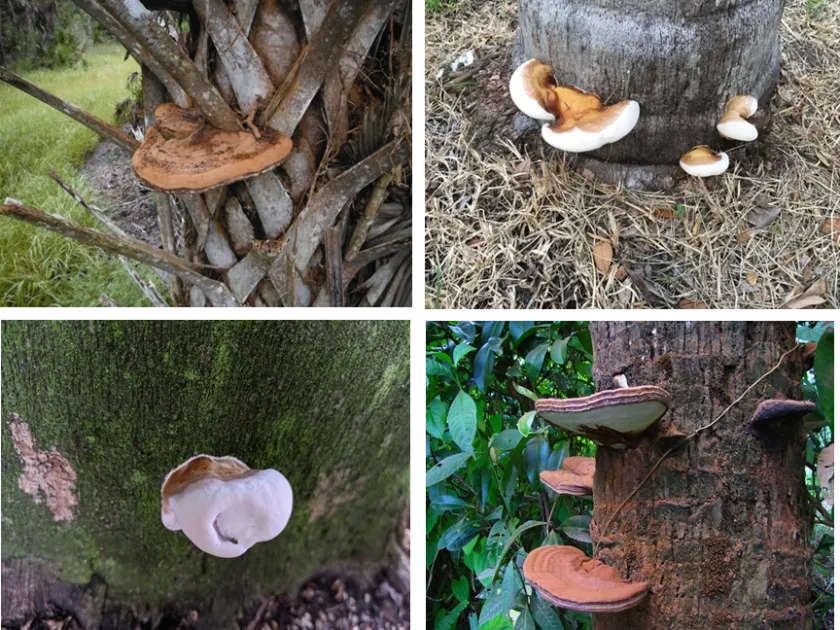
Description
Symptoms
Early symptoms include chlorosis and stunted growth of the plant, as the root system loses its ability to absorb water and essential mineral nutrients effectively.
A characteristic sign is the presence of reddish-brown mycelial mats on the roots. These mats are often visible upon careful inspection of the root surface during excavation.
As the disease progresses, the root tissue becomes soft, spongy, and brittle. Infected plants eventually lose their anchorage in the soil and can be pulled out easily.
On perennial crops like cocoa, the most visible sign is the development of shelf-like or hoof-shaped fungal fruit bodies at the base of the trunk near the ground line.
In annual crops such as chickpeas and lentils, infected plants usually wilt and die rapidly, often appearing in small, localized circular patches within the field.
Pathogen
The causative agent of the disease is the fungus Ganoderma philippii, which belongs to the class Basidiomycetes. This pathogen is a significant threat to a wide range of woody and herbaceous plants.
The fungus exists primarily in the soil as a saprotroph, feeding on decaying organic matter, but it can switch to a parasitic life cycle when encountering living hosts.
Ganoderma philippii is highly persistent in the soil environment, often surviving for years within infected root debris or buried wood, making it difficult to eradicate.
The pathogen reproduces via spores produced on fruit bodies, which are typically found at the base of infected trunks or on exposed roots, serving as the main source of inoculum.
The fungus secretes powerful enzymes capable of degrading complex plant tissues, specifically targeting the root system and causing severe decay of the vital vascular structures.
Conditions for development
The development of Ganoderma root rot is strongly favored by high soil moisture, poor drainage, and warm temperatures, which stimulate fungal growth.
Poorly aerated soils provide an environment conducive to the spread of the mycelium between roots. This is especially true in regions with high rainfall or heavy soil textures.
Mechanical injuries to the root system, often caused by tillage equipment or subterranean insects, provide easy entry points for the fungal mycelium to establish infection.
Acidic soil conditions have been observed to enhance the pathogenicity of Ganoderma philippii, leading to faster colonization of the root system.
The presence of abandoned woody debris or unremoved root stumps from previous crops significantly increases the risk of infection in the following seasons.
Why it matters
This disease causes significant economic loss by affecting high-value crops such as chickpeas, lentils, and cocoa, leading to severe yield reductions in infected areas.
The systemic damage to the root system prevents proper nutrient translocation, causing the plant to wither and eventually collapse, resulting in total crop failure in some cases.
In cocoa plantations, the disease is particularly devastating as it requires the removal of entire trees, leading to long-term productivity losses and costly replanting efforts.
The pathogen's ability to persist in the soil makes it a long-term problem, often restricting the type of crops that can be grown on the affected land for several years.
Control of Ganoderma is challenging and expensive, often involving chemical soil treatments and strict quarantine measures to prevent the spread to healthy fields.
Protection
The primary control measure is the implementation of long-term crop rotation, avoiding susceptible species on infested fields for several years to starve the fungus.
Thorough sanitation, including the complete removal of all stumps, infected roots, and woody debris, is essential to reduce the primary inoculum in the field.
Improving soil drainage is a critical cultural practice; preventing waterlogging significantly reduces the suitability of the environment for the fungus.
Seed treatment with systemic fungicides can protect the seedlings during the early stages of growth, providing a buffer against soil-borne infections.
If an outbreak occurs, affected plants should be removed along with the surrounding soil and destroyed, followed by localized soil disinfection to isolate the infection center.
Pathogens and affected parts
Affects crops · 3
Discussion
No discussions yet — be the first.