
Description
Symptoms
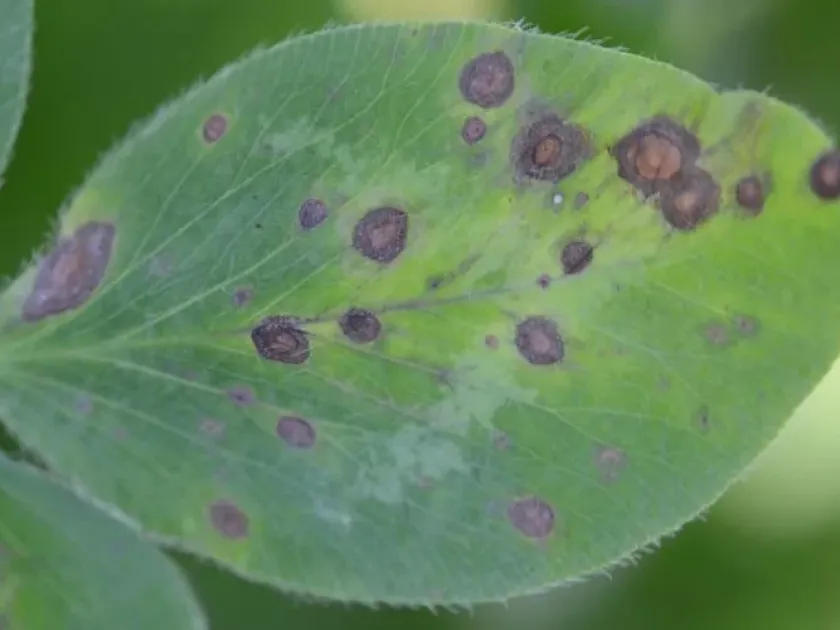
Early symptoms appear as small, tan to dark brown spots on the leaves, which often expand into irregular lesions with concentric rings, indicating the growth of the fungus.
As the disease progresses, these lesions coalesce, leading to severe chlorosis and necrosis of the leaf blades, which can eventually lead to complete defoliation.
In humid environments, a distinct dark-olive or black powdery coating of fungal spores becomes visible on the surface of the lesions, especially on the underside of leaves.
In chickpea and lentil crops, the pathogen also affects stems, causing dark, sunken lesions that can compromise the structural integrity of the plant.
Severe infestations lead to stunted growth, flower abortion, and malformed pods, severely impacting the overall physiological development of the plant.
Pathogen
The disease is caused by the fungus Stemphylium sarciniforme, an ascomycete pathogen that primarily targets various legume species, causing significant tissue necrosis.
This fungus persists in the soil and on infected plant debris, making it a persistent threat in fields where pulses are grown frequently without adequate rotation.
The life cycle involves the production of conidia, which are disseminated by wind, splashing rain, or farm machinery, facilitating rapid spread across the canopy.
Upon landing on host leaves, the spores germinate under specific moisture conditions, allowing the mycelium to penetrate the epidermis and colonize the internal tissue.
Research indicates that the pathogen can adapt to various environmental conditions, maintaining its viability in the soil for several years between host crops.
Conditions for development
High humidity and moderate temperatures ranging from 18°C to 25°C are the primary drivers for the development and spread of Stemphylium blight.
Prolonged leaf wetness, often caused by frequent rainfall or heavy dew, is critical for the infection process, as spores require moisture to germinate.
Fields with poor air circulation, often due to high planting density, provide an ideal microclimate for the fungus to multiply and infect neighboring plants.
Agricultural practices that promote plant stress, such as improper fertilization or poor water management, exacerbate the plant's susceptibility to the pathogen.
The fungus thrives during periods of consistent cloudy weather, which prevents the foliage from drying quickly, thereby extending the window for spore penetration.
Why it matters
Stemphylium blight causes substantial yield losses by reducing the photosynthetic capacity of the plant through extensive damage to the foliage.
The premature death of plant tissue interrupts the grain-filling process, resulting in smaller, shriveled seeds that have poor market quality and low germination rates.
In commercial pulse production, the disease can lead to significant economic losses due to reduced quality and the necessity of intensive fungicide applications.
If left unmanaged, the blight can spread rapidly throughout the field, leading to severe crop decline and potentially rendering parts of the harvest unmarketable.
The accumulation of inoculum in the soil from infected crops ensures that the threat persists in subsequent seasons, necessitating long-term management strategies.
Protection
Implementing a crop rotation strategy is the most fundamental step, ensuring that non-host crops are grown for at least three years to deplete soil inoculum.
Selecting and planting resistant or tolerant cultivars remains the most sustainable and cost-effective approach for managing Stemphylium blight in the field.
Effective management includes deep incorporation of crop residues into the soil to accelerate decomposition and reduce the survival rate of the fungal spores.
Timely application of foliar fungicides, guided by field monitoring and local weather patterns, is essential for suppressing outbreaks during the growing season.
- Use of high-quality, treated certified seeds.
- Maintenance of proper plant spacing to improve air flow.
- Balanced nutrient management to strengthen plant health.
- Regular scouting for early detection of lesions.
- Sanitation of equipment to prevent cross-contamination.
Pathogens and affected parts
Affects crops · 2
Discussion
No discussions yet — be the first.