
Description
Symptoms
Initial symptoms of Cylindrocladium infection typically include the development of chlorotic or necrotic spots on leaves. These spots frequently enlarge into brown, irregular lesions, often bordered by a distinct yellow or chlorotic halo.
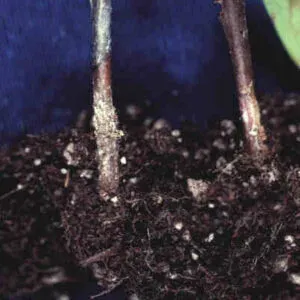
Stem infections manifest as sunken, dark-colored lesions or cankers. If a lesion girdles the stem, the plant will experience severe wilting and eventually succumb, as the vascular system is blocked from transporting water and nutrients.
Below the soil surface, the root system shows signs of rot and decay. Infected roots become brittle and discolored, typically turning dark brown or black. The loss of feeder roots leads to stunted growth and reduced overall plant vigor.
Under high humidity, a characteristic white to cream-colored mass of conidia may appear on the surface of infected lesions. This sporulation serves as the inoculum for secondary infection cycles throughout the growing season.
In chickpea crops, the appearance of the disease can be masked by other root rot complexes. Accurate diagnosis often requires observing the typical necrotic lesions and confirming the presence of characteristic fungal structures via laboratory analysis.
Pathogen
Cylindrocladium, now taxonomically recognized under the genus Calonectria, is a genus of pathogenic fungi that causes significant agricultural damage. These fungi are known for their resilience and ability to survive in the soil as microsclerotia for several years.
The pathogen affects a broad range of hosts, including woody ornamentals and various agronomic crops. In legumes, particularly chickpeas, it is notorious for causing both subterranean root decay and blighting of the foliage.
The life cycle of the pathogen involves both sexual and asexual stages, with conidia being the primary units for rapid spread. These spores are easily disseminated by irrigation water, splashing rain, contaminated soil, or human activity.
Due to its soil-borne nature, Cylindrocladium is a challenging pathogen to manage. It can survive in crop debris and infect successive plantings, establishing a long-term presence in infested agricultural land.
Biologically, the fungus is characterized by strong enzymatic activity, which allows it to decompose plant tissues effectively. Its ability to switch between necrotrophic and saprotrophic modes of life makes it a highly successful colonizer of plant tissues.
Conditions for development
The development of Cylindrocladium is heavily dependent on favorable environmental conditions, specifically warmth and high humidity. Optimal infection occurs at temperatures between 20°C and 28°C, paired with prolonged leaf wetness.
Frequent rainfall, overhead irrigation, and high relative humidity (exceeding 80%) create a conducive environment for spore germination and colonization of host tissue. Such conditions often lead to rapid epidemic outbreaks.
Dense plant canopies restrict airflow, which increases the duration of moisture retention on the plant surface. This microclimate significantly enhances the ability of the fungus to infect foliage and spread within the field.
Soil conditions play a critical role, particularly in poorly drained or compacted fields. Excessive moisture levels in the root zone facilitate the infection of roots and promote the buildup of the pathogen in the soil profile.
Cropping practices that leave significant amounts of host debris on the field surface provide a reservoir for the pathogen. Failure to implement proper rotation cycles allows the fungal population to persist and increase over time.
Why it matters
The harm caused by Cylindrocladium is significant, as it leads to plant death and reduced stand density. This loss of plant population directly translates into lower potential yields per hectare for the affected crop.
In addition to direct plant loss, the disease compromises the health of the surviving crop. Reduced root volume lowers the plant's ability to tolerate environmental stresses, such as drought or nutrient deficiencies, leading to lower quality seeds.
The disease cycle creates an economic burden by necessitating the use of fungicides and potentially forcing farmers to avoid certain fields for long periods to allow the pathogen population to decline.
Cylindrocladium also impacts nitrogen fixation in legumes like chickpeas, as the root infection disrupts the symbiotic relationship with root-nodule bacteria, further weakening the plant's physiological condition.
The economic impact extends to the increased costs of production, including the need for specialized sanitation procedures for equipment and the potential for crop failure in highly infested areas.
Protection
Effective control of Cylindrocladium requires an integrated pest management (IPM) approach centered on preventive strategies. Crop rotation with non-host species is the most fundamental step in breaking the infection cycle.
- Use only certified, pathogen-free, and treated seeds for sowing.
- Ensure proper field drainage to avoid waterlogged conditions.
- Deep-plow crop residues to accelerate their decay and minimize inoculum survival.
- Implement rigorous sanitation of equipment moved between infested and clean fields.
- Apply systemic fungicides strategically when environmental conditions favor disease outbreaks.
Chemical control should be employed with caution and in rotation to avoid the development of fungal resistance. Selecting fungicides that offer both preventive and curative properties is essential for managing established infections.
Breeding for resistant varieties represents the most sustainable long-term solution. In the meantime, integrating biological control agents that exhibit antagonism against the pathogen can help reduce the soil-borne inoculum pressure.
Pathogens and affected parts
Affects crops · 1
Discussion
No discussions yet — be the first.