
Description
Symptoms
The first symptom is a sudden loss of turgor in the leaves, which turn yellow and dry out while remaining attached to the stem.
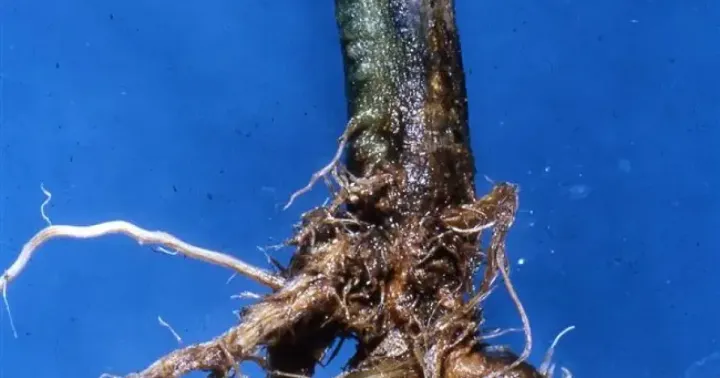
Upon examination, the root system shows signs of decay, with a characteristic brownish or bronze-colored fungal mycelium visible on the root bark.
In chickpea crops, the disease typically manifests in patches, spreading from infected plants to neighboring healthy ones through direct root contact.
The root bark often peels away easily, and the root system eventually undergoes complete rot, causing the plant to be easily pulled from the soil.
Symptoms usually appear during the hottest part of the growing season, with plants collapsing within a few days of the initial visible decline.
Pathogen
The disease is caused by the fungus Phymatotrichopsis omnivora (synonym Ozonium texanum). It is a persistent soil-borne pathogen that targets the root systems of various plants.
The fungus survives in the soil for many years by producing sclerotia, which are highly resistant to adverse environmental conditions and chemical treatments.
The mycelium grows through the soil, penetrating root tissues and clogging the vascular system, which rapidly causes the plant to wilt and die.
The lifecycle includes a stage of forming spore mats on the soil surface, typically appearing after significant rainfall during warm months.
This pathogen has a very broad host range, affecting hundreds of dicotyledonous species, including legumes and various woody plants.
Conditions for development
Disease development is highly dependent on temperature, thriving in warm, moist soils with temperatures often exceeding 25–28 degrees Celsius.
Periods of high rainfall followed by drought often trigger severe outbreaks, as the fungus responds to fluctuations in soil moisture.
The pathogen prefers alkaline soil conditions; therefore, fields with high pH levels are at a significantly higher risk for infestation.
Poor soil aeration and root injuries caused by cultivation or nematodes can facilitate the entry of the fungus into the plant's tissues.
Monocropping of susceptible plants allows the inoculum density in the soil to reach levels that make successful crop production nearly impossible.
Why it matters
The primary impact is the rapid death of infected plants, resulting in significant stand loss and a dramatic reduction in final grain yields.
In chickpeas, the pathogen can destroy entire sections of a field, leading to severe economic losses and the need for expensive land remediation.
The long-term survival of sclerotia in the soil makes it difficult to manage, as infested fields may remain unsuitable for susceptible crops for decades.
In addition to yield loss, the disease compromises the quality of surviving plants, resulting in stunted growth and poorly filled pods.
The sudden death of plants limits the time farmers have to implement emergency control measures, making the disease highly unpredictable.
Protection
Crop rotation with non-host species, such as monocots or cereal grains, is the most effective cultural practice for reducing inoculum levels in the soil.
Deep plowing can help disrupt the fungal mats and alter the soil environment, making it less favorable for the pathogen's rapid colonization.
The application of organic amendments, such as manure or green manure, has been shown to suppress the fungus by encouraging antagonistic microorganisms.
Soil acidification through the use of specific fertilizers can help manage the pathogen in alkaline soils, although this requires careful monitoring.
- Strict sanitation protocols to prevent the movement of infested soil between fields.
- Monitoring fields for early signs of wilting in patches.
- Selecting planting dates to avoid the peak temperature conditions favorable for fungal growth.
Pathogens and affected parts
Affects crops · 1
Discussion
No discussions yet — be the first.