
Description
Symptoms
The initial signs often include foliage chlorosis and progressive wilting, typically starting from the bottom of the plant. Leaves may turn yellow or brown and drop prematurely.
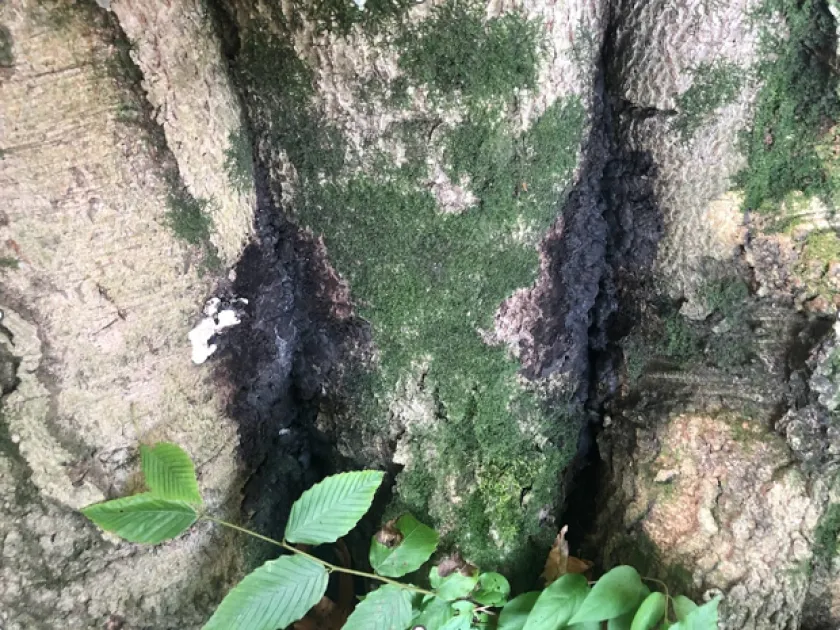
Necrotic lesions with a black or dark brown appearance often form on the root collar and primary roots. Peeling back the bark reveals a distinct white or grayish mycelial mat covering the affected tissue.
Under high-humidity conditions, the fungus produces characteristic fruiting bodies on the surface of the bark. These appear as flattened, rigid, charcoal-like crusts which give the affected area a charred look.
The wood within the infected zone loses structural integrity, becoming brittle and emitting a distinct musty odor. Plants may eventually collapse or tip over due to severe degradation of the root system.
In perennial trees like coffee, a common symptom is dieback, where the tips of the branches dry out as the damaged root system fails to sustain the overhead canopy.
Pathogen
The disease is caused by the fungus Ustilina deusta (formerly known as Hypoxylon deustum), a member of the Ascomycota class. This organism functions primarily as a pathogen and saprophyte, targeting the roots and root collars of various plant species.
The biology of the pathogen is characterized by its ability to persist for extended periods in soil and decaying organic matter, making it highly resilient to harsh environmental conditions.
Infection occurs primarily when the fungus enters through mechanical injuries or natural wounds in the root system. Once inside, the mycelium spreads throughout the vascular tissues, impeding the transport of nutrients and water.
Spore production is a key element of its life cycle; these spores are dispersed via wind, rain splashes, and human activity during agricultural operations, facilitating the rapid spread within a field.
This fungus exhibits a broad host range, known to affect significant crops including peanuts, papaya, chickpeas, Arabica and Robusta coffee, lentils, and cacao.
Conditions for development
The development of Ustilina deusta is heavily favored by high soil and air moisture levels. Waterlogged soil conditions are particularly conducive to the rapid spread of the fungus.
Optimal temperatures for fungal growth range between 20 and 28 degrees Celsius. During these warm and humid periods, the pathogen colonizes host tissue most aggressively.
Root damage caused by soil-borne pests, such as nematodes or beetle larvae, creates entry points that significantly accelerate the rate of infection in healthy plants.
Poor field hygiene, dense planting, and inadequate ventilation create a humid microclimate in the root zone, which promotes spore formation and transmission between adjacent plants.
Soils with low organic matter content and poor aeration tend to weaken the plant's natural defense mechanisms, increasing susceptibility to fungal root pathogens.
Why it matters
The primary harm caused by this disease is the permanent death of the host plant, which can lead to significant yield losses and the necessity to clear entire plantation sections.
In perennial cropping systems like coffee or cacao, the disease often remains latent for long periods, making early detection difficult and often leading to the loss of mature, productive trees.
For leguminous crops such as peanuts, lentils, and chickpeas, infection directly reduces grain quality and harvest volume, leading to severe economic consequences for producers.
Because the pathogen can persist in the soil for years, it severely limits future crop choices and necessitates long-term management strategies for infested land.
Beyond crop loss, the cost of managing the disease, including sanitation, soil disinfection, and replanting, significantly impacts the overall profitability of the agricultural operation.
Protection
Strict phytosanitary practices are essential for management. This includes the removal and destruction of symptomatic plants, ensuring that the entire root system is extracted from the soil.
Implementing effective crop rotation is a vital strategy to break the life cycle of the fungus, avoiding the cultivation of susceptible hosts in infested fields for several years.
Improving soil drainage and aeration is critical to preventing the moist conditions that favor the disease. Avoiding over-irrigation and maintaining proper plant spacing are also recommended.
The use of certified, disease-free planting material helps prevent the introduction of the pathogen into new areas, maintaining the health of the agricultural ecosystem.
Regular sanitation of tools and the avoidance of root injuries during cultivation are essential practices to minimize entry points for Ustilina deusta.
Pathogens and affected parts
Affects crops · 7
Discussion
No discussions yet — be the first.