
Description
Symptoms
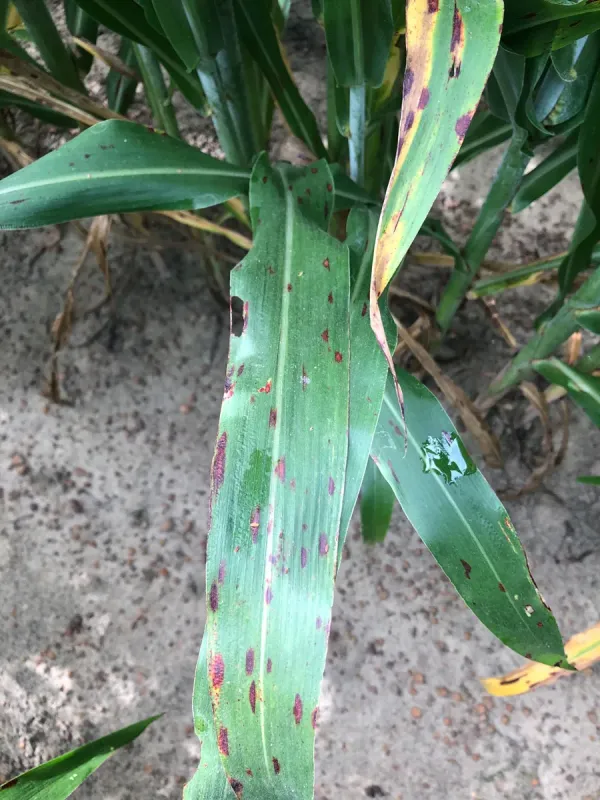
The primary symptom is the appearance of water-soaked, dark spots that progressively develop into necrotic lesions or stem cankers.
In chickpeas, the infection is often identified by elongated reddish-brown or black stripes appearing along the stems and leaf petioles.
Under high humidity conditions, a bacterial exudate may be visible on the surface of the lesions, appearing as a thin film or small droplets.
Severe infection leads to stem deformity, wilting of individual branches, and in cases of high pressure, the eventual death of the plant.
As the disease progresses, the foliage begins to yellow, curl, and wither prematurely, causing a significant reduction in the plant's photosynthetic capacity.
Pathogen
The causative agent of this disease is the bacterium Pseudomonas andropogonis, which is a Gram-negative phytopathogen belonging to the Pseudomonadaceae family.
This pathogen infects plants by entering through natural openings like stomata or through mechanical injuries on the stems and leaf structures.
The bacterium is highly persistent and can survive for extended periods in crop residues, soil, and on the surface of seed material.
During the infection process, the bacteria produce enzymes that degrade the cell walls of the host plant, leading to tissue necrosis and structural damage.
P. andropogonis is known for its wide host range, making it a significant threat to various agricultural crops beyond just legumes.
Conditions for development
The development of Pseudomonas andropogonis is heavily favored by prolonged rainy weather and high relative humidity levels, typically exceeding 85%.
Optimal temperatures for rapid bacterial proliferation range from +20°C to +28°C, which often aligns with the peak growing season for many crops.
Free moisture on plant surfaces is a critical requirement for bacterial cells to germinate and initiate the infection process within the plant tissues.
Poor agricultural practices, such as excessive nitrogen fertilization and high planting densities, create a stagnant microclimate that promotes disease spread.
The pathogen is disseminated throughout the field by rain splashes, wind, contaminated farm tools, and potentially by insects feeding on the plants.
Why it matters
The economic impact of bacterial stem blight includes reduced crop yields and a decline in the quality and viability of harvested seeds.
In chickpea fields, the disease can cause significant stand reduction, leading to uneven crop development and decreased overall grain production.
The infection disrupts the vascular system, impairing the transport of water and nutrients, which results in stunted plant growth.
Early-season infections can lead to total yield loss in affected areas due to the abortion of reproductive structures and failure of pod development.
Damaged tissues are often predisposed to secondary infections by various fungal pathogens, which further complicates the health of the crop.
Protection
The foundation of effective management is the use of healthy, certified seeds treated with appropriate bactericides to eliminate potential contamination.
Strict adherence to crop rotation, ensuring a gap of at least 3–4 years before planting susceptible crops in the same field, is essential.
Deep plowing and incorporation of crop residues into the soil are vital to destroy the primary inoculum sources that persist after harvest.
- Effective weed management to remove potential hosts
- Maintaining optimal row spacing to improve air circulation
- Integrated pest management to control insect vectors
Prophylactic or early-stage applications of copper-based bactericides can help limit the spread of the pathogen during favorable weather conditions.
Pathogens and affected parts
Affects crops · 1
Discussion
No discussions yet — be the first.