
Description
Symptoms
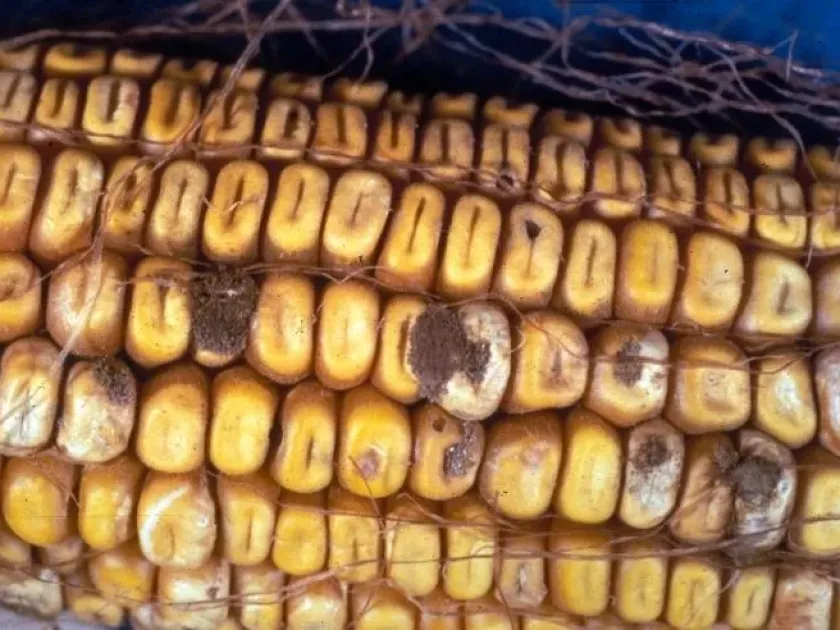
The primary symptom of the disease is the appearance of a powdery mold growth on the surface of seeds, germinating sprouts, or young seedlings.
The color of this fungal growth typically ranges from yellow-green to olive-green, depending on the mass production of the pathogen's conidia.
Infected seeds often fail to germinate, rotting directly in the soil, or produce weak, stunted, and deformed sprouts that collapse quickly.
Lesions appear as necrotic spots on the hypocotyl of seedlings, which expand rapidly and lead to damping-off and the death of young plants.
In field conditions, severe infection manifests as a significant reduction in plant density, which is particularly critical for sensitive crops like chickpeas.
Pathogen
The disease is caused by Aspergillus flavus, a ubiquitous soil-borne saprophytic and opportunistic fungal pathogen.
This fungus is characterized by high biological adaptability, allowing it to thrive across a wide range of temperature and environmental conditions.
The primary reservoir of infection is the soil and decaying crop residues where the fungus persists as spores or mycelium for extended periods.
Contaminated seed lots serve as a secondary but major route for the dispersal of the pathogen to previously uninfected agricultural fields.
Besides its pathogenicity to plants, Aspergillus flavus is well-known for producing harmful mycotoxins, specifically aflatoxins, under favorable conditions.
Conditions for development
Warm soil conditions, typically ranging from +25°C to +35°C, are ideal for the rapid development and propagation of Aspergillus flavus.
High moisture levels in the soil or air promote the germination of fungal spores and facilitate the colonization of seed tissues.
Delayed germination, often caused by suboptimal planting depths or environmental stress, significantly increases the vulnerability of seeds to rot.
Mechanical damage to the seed coat during harvesting or processing creates entry points for the fungus to penetrate and colonize the embryo.
Poor aeration and high humidity during storage are critical factors that trigger the explosive growth of the fungus in stored grain products.
Why it matters
The major impact of this disease is a sharp decline in field emergence, leading to sparse and uneven crop stands that are difficult to manage.
Crops such as chickpeas are highly susceptible during the germination phase, and severe infection can lead to total crop failure in specific areas.
Surviving seedlings often exhibit poor vigor and delayed development, ultimately resulting in reduced yields and inferior seed quality at maturity.
Seed decay caused by the fungus renders the harvested product unmarketable and unsuitable for either human consumption or animal feed.
The presence of Aspergillus flavus on grain poses a severe health risk due to the potential accumulation of toxic aflatoxins in the final product.
Protection
The most effective strategy for disease management is the systematic treatment of seeds with appropriate fungicides before planting.
Optimizing planting dates to ensure rapid germination under favorable growth conditions is a key cultural practice to mitigate infection risks.
Maintaining rigorous storage hygiene, including drying grain to moisture levels below 14%, is essential to prevent fungal proliferation.
Using high-quality, mechanically sound seeds with high germination energy helps plants overcome the early-stage infection pressure from the soil.
- Utilizing cultivars that exhibit natural resistance to soil-borne pathogens.
- Ensuring proper soil drainage to avoid waterlogging near the root zone.
- Regular monitoring and aeration of stored agricultural commodities.
Pathogens and affected parts
Affects crops · 1
Discussion
No discussions yet — be the first.