
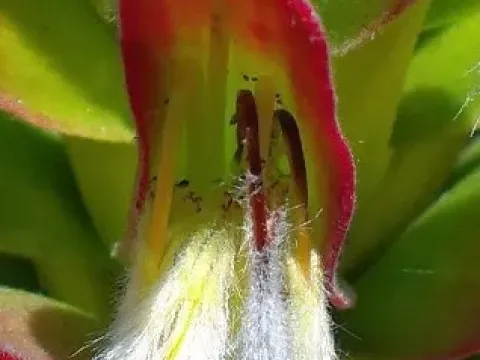
Mimetes
Mimetes
Sowing Mimetes seeds is a delicate process that requires the simulation of South African mountain conditions. Seeds should be sown in autumn or early winter in a well-draining substrate composed of sand and acidic peat.
What the section contains


Mimetes
Successful germination requires a significant temperature differential: cool nights (around 10–12°C) and moderately warm days (18–20°C). This cycle mimics the natural climate of their habitat.
A critical technique involves pre-treating seeds with smoke or using specialized "smoke water," as natural germination in their native environment is often triggered by post-fire conditions.
Seedlings develop slowly, so it is essential to avoid overwatering, which can lead to damping-off and the loss of young plants during the early stages of growth.
When transplanting or potting up seedlings, handle them with extreme care, as the root system is highly sensitive and susceptible to transplant shock.
Mimetes belongs to the Proteaceae family and has specific growth requirements. The crop prefers bright, direct sunlight, as shaded conditions lead to leggy stems and poor flowering.
The plants require acidic soils with very low phosphorus content. Excessive phosphorus is toxic to Proteaceae roots, so it is vital to use fertilizers formulated specifically for this family.
Watering should be regular but moderate. The soil must have excellent drainage to prevent root rot, which is the primary threat to this species.
The ideal climate for Mimetes is Mediterranean, with mild winters and dry summers. In regions with harsh winters, the plant must be grown in greenhouses or as a container-grown crop.
Mimetes is highly sensitive to water quality. Using hard or alkaline water causes substrate alkalization, leaf chlorosis, and the gradual decline of the plant.
The primary agricultural use of Mimetes is for the production of high-quality cut flowers for the floriculture industry, prized for their unique inflorescence structure.
The yield of a bush depends on the plant's age and adherence to specific cultural practices. The first harvestable blooms typically appear in the 3rd or 4th year after sowing.
Harvested stems have a long vase life, making them highly sought after in the premium floral market for creating exotic and high-end arrangements.
Optimal yields are achieved through regular rejuvenation pruning, which stimulates the growth of new flowering stems and prevents the bush from becoming overly woody.
To maximize marketable yield, plantations are often situated on slopes with good air circulation, which promotes the development of sturdier and more uniform stems.
Mealybugs and scale insects are the primary pests of Mimetes, as they damage young shoots and leaves by sucking plant sap and stunting growth.
Root rot, caused by Phytophthora fungi, represents the most significant threat. It thrives in conditions of poor drainage and insufficient soil aeration.
Micronutrient deficiencies, particularly iron, due to incorrect soil pH, often manifest as leaf chlorosis, significantly reducing photosynthetic activity and flower quality.
Strict phytosanitary control is recommended to manage disease, including the prompt removal of infected plant parts and ensuring adequate airflow between bushes.
Pesticide application must be handled with care; products with high copper concentrations should be avoided, as Proteaceae are known to be sensitive to them.
Harvesting should occur when the bracts are fully colored and the central part of the inflorescence begins to open, while still maintaining optimal decorative value.
Stems should be cut using sharp, sterilized secateurs, leaving a portion of the matured growth to stimulate future side shoots. Avoid cutting too deeply into old, woody tissue.
Immediately after cutting, stems should be placed in clean water supplemented with floral preservatives to extend vase life and prevent bacterial contamination.
Harvesting is best performed in the cool, early morning hours when the plant's turgor pressure is highest, which improves the durability and quality of the cut flowers.
The harvested material must be sorted by stem length and maturity stage, then packed in protective materials to minimize mechanical damage during transport.