
Macadamia
Macadamia
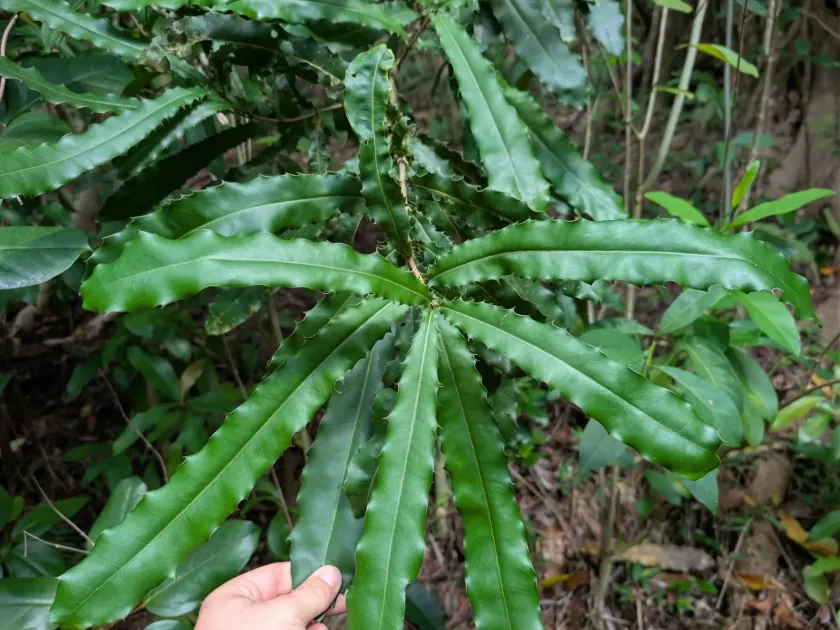
Description
Sowing dates
Macadamia belongs to the Proteaceae family. These are evergreen trees that grow relatively slowly, and while seed-grown trees take 7 to 10 years to reach maturity, grafted saplings are preferred in commercial farming to ensure production begins within 3 to 5 years.
Proper site preparation is the foundation of a successful macadamia orchard. The trees require deep, fertile, and well-drained soil with a pH level ranging from 5.0 to 6.5. Improving soil structure through organic amendments is vital before planting.
Planting usually occurs at the onset of the rainy season to allow root systems to establish before dry spells. Optimal spacing depends on the variety and canopy management, typically requiring 8 to 10 meters between trees to allow for adequate airflow and sunlight.
Macadamia trees are cross-pollinators, making it essential to plant multiple compatible varieties in an orchard to ensure cross-fertilization. Insect pollination, particularly by honey bees, is critical to increasing fruit set and overall yield.
Young trees require protection from strong winds and intense solar radiation during their first year. Providing staking and protective netting helps ensure a straight trunk and prevents structural damage to the developing canopy.
Growing requirements
Macadamia trees are sensitive to temperature and thrive in tropical or subtropical climates with average temperatures between +20 and +25 degrees Celsius. Even minor frost events can severely damage flowers and new shoots, reducing potential yields.
The trees need consistent moisture levels throughout the growing season. In regions with irregular rainfall, installing a drip irrigation system is necessary to mitigate water stress, which can lead to premature nut drop and poor kernel quality.
Soil nutrient management must be precise, as macadamia roots are sensitive to high phosphorus levels. Fertilizer programs should be based on regular leaf and soil analysis to ensure the correct balance of micronutrients without harming the root system.
Good soil drainage is non-negotiable. Macadamia trees are highly susceptible to root rot if water sits around the base of the tree. Selecting a site with natural drainage or creating raised beds is a standard practice for long-term tree health.
Orchard layout should focus on light penetration. Regular pruning is required to maintain canopy health and allow light to reach the inner branches, which stimulates the growth of new fruiting wood and maximizes harvest efficiency.
Yield
Macadamia yields improve gradually as the trees mature. A healthy tree in its prime (10 to 12 years old) can produce between 20 and 50 kilograms of nuts-in-shell per season, depending on environmental conditions and horticultural inputs.
Long-term productivity is a hallmark of the macadamia industry, with trees remaining productive for several decades. With professional canopy management and rejuvenating pruning, orchard owners can maintain consistent yield levels over a tree's lifespan.
Micronutrients like boron and zinc are crucial for yield stability. These elements support flowering and nut set, and their application via foliar sprays can significantly improve fruit retention and kernel size in challenging growing environments.
Adverse weather conditions are the greatest risk to yield. High winds can cause physical damage, while excessive heat during pollination can lead to crop loss. Windbreaks are often planted around orchard perimeters to create a microclimate favorable to production.
Mechanization of the harvest is common in large-scale orchards. Using mechanical sweepers and nut harvesters allows for rapid collection from the ground, which is essential for maintaining nut quality by minimizing exposure to damp soil and potential contaminants.
Main diseases and pests
Pest management focuses primarily on nut borers and leaf-eating insects that can devastate a crop. Integrated Pest Management (IPM) strategies, including pheromone traps and biological controls, are preferred to minimize chemical use and protect pollinator populations.
Root rot caused by Phytophthora species is a major threat in poorly drained soils. Prevention involves maintaining good soil structure and applying systemic fungicides if the orchard shows early signs of infection or in high-risk climates.
Anthracnose is a common fungal disease that affects blossoms and young fruit, particularly during periods of high humidity. Regular scouting and timely fungicide applications are necessary to protect the crop during critical growth phases.
Wildlife, including rodents and certain bird species, can cause significant losses by feeding on the nuts before harvest. Protective measures like orchard fencing or netting are effective strategies to prevent damage and reduce crop wastage.
Weed management in the orchard floor is necessary to prevent competition for water and nutrients. Mulching helps retain soil moisture and suppresses weeds, while periodic mechanical mowing ensures easier access during the harvest season.
Harvesting
Macadamia harvest begins only after the nuts have reached full maturity, evidenced by the natural drop of the nuts from the tree to the ground. Harvesting prematurely results in low-oil content and inferior nut quality.
Post-harvest, the green husks must be removed within 24 hours. Delays in dehusking lead to enzyme activity that discolors the kernel and increases the risk of mold growth, significantly reducing the market value of the harvest.
Drying is the most critical step in processing. Fresh nuts have high moisture content and must be gradually dried down to 1.5–3% moisture. This stabilization process is essential to ensure long-term shelf life and prevent the nuts from becoming rancid.
Sorting and grading based on size and quality allow farmers to categorize the produce for various markets. Premium nuts are often kept in the shell until ready for processing, as the hard shell acts as a natural barrier to oxidation.
Proper storage is required to maintain the high oil quality of the kernels. Nuts should be kept in cool, dry, and dark environments. When stored correctly in airtight packaging, macadamia nuts retain their taste and nutritional benefits for extended periods.