
Protea aurea
Protea aurea
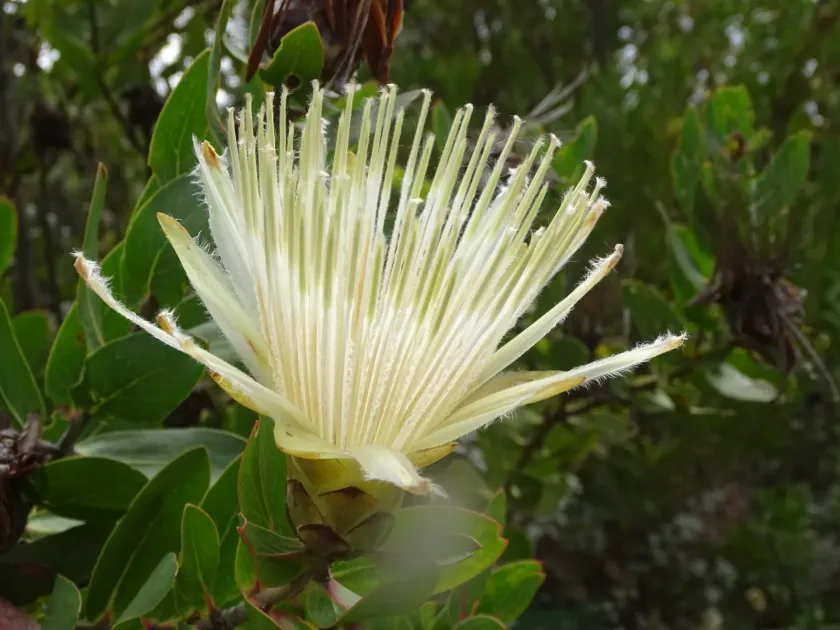
Description
Sowing dates
Propagation of Protea aurea is primarily achieved through seeds, as cutting propagation remains challenging due to low rooting success rates. Sowing is typically performed in late summer or early autumn to ensure seedlings gain sufficient strength before the peak growth season.
The growing medium must be nutrient-poor, acidic, and provide excellent drainage. A mixture of washed river sand and acidic peat, completely free from traditional fertilizers, is essential for successful germination.
Seeds require a naturalistic temperature fluctuation to trigger germination. Daytime temperatures should reach 20–22°C, while nighttime temperatures should drop to 10–12°C, simulating the conditions of their native habitat.
Germination can be irregular and prolonged, often taking several months. Once the first true leaves appear, seedlings are transplanted into individual containers, exercising extreme caution to protect the delicate root system.
Maintaining proper moisture balance is critical, as seeds are highly susceptible to fungal infections and damping-off if the soil remains waterlogged. Fungicide application at the seedling stage is recommended as a preventative measure.
Growing requirements
Protea aurea is an evergreen shrub belonging to the Proteaceae family, indigenous to South Africa. In its natural environment, it can grow up to 3-4 meters in height and is prized for its spectacular, golden-hued flower heads.
This crop requires maximum sunlight exposure. Inadequate light levels result in leggy, brittle growth and a total cessation of floral bud development, rendering the plants unsuitable for commercial use.
Soil must be acidic (pH 5.0–5.5) and exceptionally well-drained. Proteas are extremely sensitive to phosphorus; therefore, standard balanced fertilizers are toxic to them and must be strictly avoided to prevent plant decline.
Irrigation should be performed exclusively with soft, low-mineral water, such as rainwater, to prevent salt accumulation in the soil and subsequent pH fluctuations that can damage the sensitive roots.
Adequate ventilation is necessary to ensure plant health. Stagnant, humid air creates an environment conducive to bacterial and fungal pathogens, requiring forced air circulation in protected greenhouse environments.
Yield
Protea aurea is cultivated commercially primarily for the cut flower market. Its inflorescences are highly valued in floral design for their architectural structure and exceptional vase life, lasting up to several weeks.
Yield depends heavily on the plant's maturity and adherence to rigorous pruning schedules. Seedlings typically reach their first productive flowering phase between 3 and 5 years of age, necessitating significant long-term investment.
Greenhouse cultivation requires strict control over microclimate parameters. Strategic pruning post-flowering is essential to stimulate the development of new, high-quality stems for the following season's production.
Plant density must be carefully managed to optimize light penetration and airflow. Overcrowded conditions lead to lower quality stems and increase the risk of disease, directly impacting the economic viability of the operation.
Marketable stems are graded based on length, uniformity of the flower head, and the absence of aesthetic defects. High-quality stems command premium prices in international floral markets due to their durability.
Main diseases and pests
The most significant threat to Protea aurea is root rot caused by Phytophthora species. This pathogen thrives in overly wet conditions and can devastate an entire crop rapidly, making soil moisture control the highest priority.
Common pests include aphids and mealybugs, which infest young shoots and flower heads. These pests cause physical damage, suck vital nutrients, and frequently act as vectors for viral diseases that deform plant structures.
Integrated Pest Management (IPM) practices, including regular inspections and the application of mild, plant-safe insecticides, are required. Harsh chemicals must be avoided, as they can cause severe phytotoxicity on foliage.
Nutrient imbalances, particularly iron or trace element deficiencies, often manifest as leaf chlorosis. This is typically addressed by adjusting soil pH and applying specifically formulated, low-phosphorus micro-nutrient chelated fertilizers.
Sanitation protocols, such as disinfecting pruning tools between plants, are mandatory to prevent the transmission of pathogens, ensuring the health and longevity of the greenhouse crop.
Harvesting
Harvesting should occur during dry weather conditions when the involucral bracts are fully expanded, providing the ideal aesthetic presentation. Early harvest results in failure to open properly, while late harvest reduces vase life.
Stems must be cut using sterilized, sharp instruments, leaving enough foliage on the shrub to support continued photosynthesis and metabolic recovery for the subsequent growing cycle.
Stems should be placed in clean water immediately after cutting. The use of specialized post-harvest floral preservatives is recommended to inhibit bacterial growth in the water and maintain vascular flow in the stems.
Cold chain logistics are essential for transport. Storing harvested stems at 4–8°C significantly slows metabolic decay, ensuring the product arrives at its destination in peak condition.
Rigorous quality control and sorting are performed prior to packaging. Only stems that meet strict uniformity and health standards are selected for sale, ensuring that defective materials are discarded to protect brand reputation.