
Protea caffra
Protea caffra
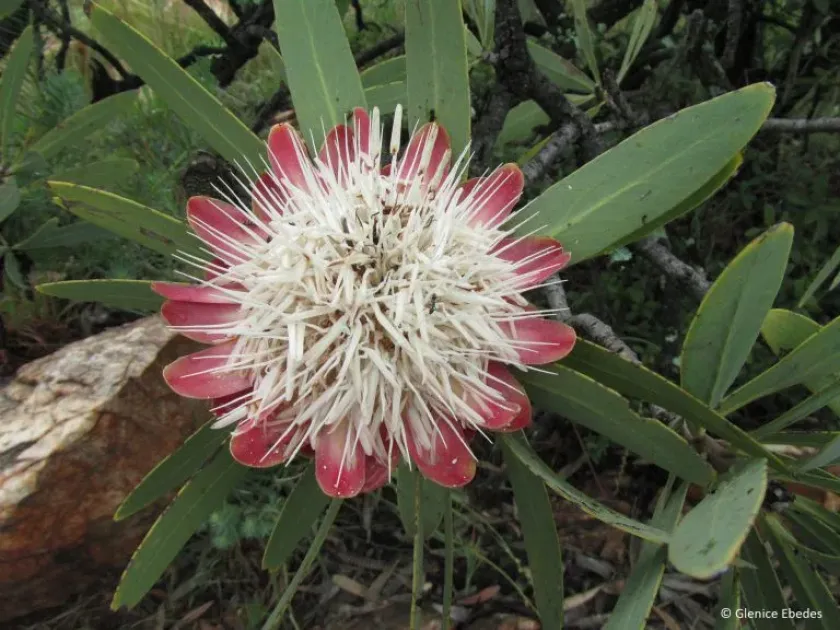
Description
Sowing dates
The seeds of Protea caffra are primarily sown in late winter or early spring to ensure the plant acclimates to the increasing day length. The sowing substrate must be extremely nutrient-poor, as the species is highly sensitive to phosphorus levels in the soil.
To speed up germination, seeds are often subjected to smoke-water treatment or stratification, mimicking the natural conditions of wildfires in African savannahs. Seeds are buried shallowly and covered with a fine layer of sand to prevent them from drying out.
Germination is often uneven and may take several weeks, requiring a stable temperature range of 20–25 degrees Celsius. Once the first two pairs of true leaves emerge, seedlings are pricked out into individual containers with excellent drainage.
For commercial production intended for the floral market, vegetative propagation via cuttings is preferred. Cuttings are taken in late summer using semi-hardwood growth from the current year, often treated with rooting hormones to enhance success.
Young plants require a precise watering regime to avoid waterlogging at the roots, which is fatal for Proteaceae species. Planting sites should be chosen for maximum solar exposure while avoiding areas prone to cold air stagnation.
Growing requirements
Protea caffra, a member of the Proteaceae family, is an evergreen shrub or small tree that reaches heights of 3–5 meters in the wild. It displays high adaptability to various rocky soil types found in its native habitat in South Africa.
The primary soil requirement is acidity, typically ranging from pH 5.0 to 6.5. The medium must be well-drained, sandy, or stony, and free of organic fertilizers, as the plant has specialized "proteoid" roots that are highly sensitive to nitrogen and phosphorus toxicity.
The culture thrives under full, direct sunlight throughout the day and performs poorly in shaded conditions. While it can withstand light, brief frosts, prolonged sub-zero temperatures require protective covers or the relocation of container plants to a sheltered environment.
Irrigation should be moderate; the plant tolerates drought much better than excess moisture. In conditions of high ambient humidity, active ventilation is essential to prevent the development of fungal infections on the leaves and bracts.
Transplanting is generally poorly tolerated, so the final planting site should be carefully selected. During intensive cultivation, any phosphorus-containing fertilizers must be strictly avoided as they are toxic to this specific species.
Yield
The economic use of Protea caffra centers on the production of high-quality cut flowers for the global floral market. Productive flowering typically begins 3–4 years after sowing, depending on the growing environment and light intensity.
Yield is measured by the number of marketable inflorescences suitable for harvesting. A mature plant in optimal climate conditions can produce between 10 and 30 inflorescences during the flowering season, which generally occurs in summer.
Protea inflorescences are renowned for their exceptional vase life, often remaining ornamental for 2–3 weeks. With proper maintenance, a plantation can remain productive for 10–15 years while maintaining stable yield metrics.
Pruning is a critical factor in yield quality: the annual trimming of shoots stimulates the development of new flowering branches. Without systematic pruning, the shrub quickly loses its structural integrity and reduces its flowering capacity.
The export value of this crop is driven by its exotic aesthetic and high resistance to transport stress. In international trade, Protea species occupy a premium position within the decorative flower market.
Main diseases and pests
The primary threat to Protea caffra is fungal infection, particularly root rot (Phytophthora), which strikes when drainage systems fail. Affected specimens are often incurable and must be removed from the site immediately to prevent spread.
Powdery mildew can affect foliage if greenhouse ventilation is inadequate. Proactive management involves maintaining proper spacing between plants and applying fungicides at the first sign of symptomatic growth.
Common pests include scale insects and mealybugs. These sap-sucking pests weaken the plant and encourage the development of secondary infections, such as sooty mold, which can degrade the appearance of the flowers.
Snails and slugs pose a risk to young seedlings in open ground, as they consume the delicate apical meristems. Mechanical barriers, such as gravel mulching around the base of the plant, are effective in protecting young growth.
Aphids may also colonize flower heads during the budding phase. The use of systemic insecticides requires extreme caution, as the plant's delicate root system is sensitive to chemical interference.