
Fernseea
Fernseea
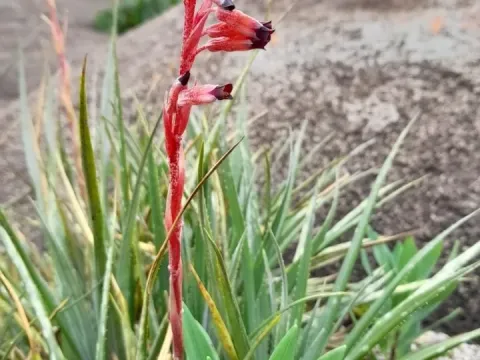
The genus Fernseea belongs to the Bromeliaceae family and consists of perennial herbaceous plants native to Brazil. These species primarily grow as epiphytes or lithophytes, occupying humid and sheltered niches within their natural habitats.
What the section contains


Fernseea
Cultivating Fernseea successfully requires mimicking a tropical environment with consistently warm temperatures and high relative humidity. It is essential to protect the plants from harsh, direct sunlight to prevent leaf burning and dehydration.
The growth medium must be well-drained and airy to prevent root suffocation. A standard mixture for these plants includes coarse pine bark, perlite, sphagnum moss, and charcoal, which provides excellent drainage and aeration for the roots.
Watering requires care; it should be applied to the soil and the central rosette, ensuring the water is soft and at room temperature. Overwatering must be avoided, especially during cooler months, to prevent the onset of rot.
In terms of usage, Fernseea is highly valued in the horticulture sector as a decorative specimen for specialized greenhouses and indoor collections, prized for its unique foliage structure and attractive floral displays.
The most significant threat to the health of Fernseea is fungal infection, typically caused by excess humidity and lack of proper air circulation, which leads to root and crown rot in the central plant structure.
Common pests include scale insects and mealybugs, which tend to hide in the tight bases of the leaves. These pests weaken the plant by sucking nutrients and can leave residues that encourage the growth of sooty mold.
Spider mites can become a problematic issue if the ambient air becomes too dry. They feed on the underside of the leaves, causing discoloration and potentially stunting the growth of the plant if left untreated.
Preventive care involves frequent monitoring of the leaf axils and maintaining a clean environment around the plant to prevent the accumulation of dust and moisture-retaining debris.
Effective management includes the use of mild insecticidal soaps or systemic treatments tailored for epiphytic plants, ensuring that the treatment does not damage the delicate surfaces of the bromeliad leaves.