
Description
Symptoms
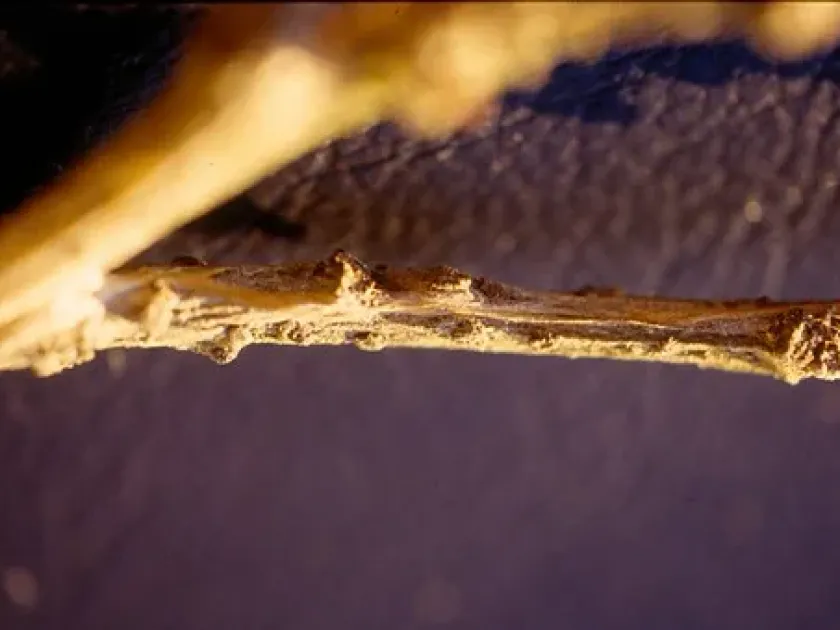
The primary symptom of the disease is the appearance of thin, thread-like mycelial strands on branches and leaves, which often interweave to form a spider-web-like network. Affected leaves darken rapidly, turning brown or nearly black before eventually dying.
A distinctive feature of this disease is that dead leaves often do not fall but remain hanging from the branches, held by the tough fungal threads. This creates a visual effect of "hanging foliage," which allows for easy identification of the infection at early stages.
On the surface of young shoots, a whitish or creamy mycelial mat can be observed, which thickens over time. In infected areas, the bark may crack, and the shoots themselves lose turgor and gradually wither, starting from the tips.
The disease spreads in patches, initially occupying specific parts of the canopy before eventually covering the entire plant. The infection can also attack developing fruit, causing deformation and premature abscission long before biological maturity.
In citrus and coffee crops, symptoms become particularly severe during humid periods, as the fungus actively develops on the surface of the epidermis. Leaves curl and develop necrotic spots, leading to total defoliation of the trees if left untreated.
Pathogen
The causal agent of the disease is the pathogenic fungus Ceratobasidium koleroga (formerly known as Pellicularia koleroga). It belongs to the basidiomycetes and predominantly lives as an epiphyte on the aerial parts of plants.
The fungus can survive as mycelium within the tissues of infected branches and fallen leaves during the off-season. Under favorable conditions, it quickly resumes activity, forming basidia and basidiospores that facilitate further infection.
The pathogen demonstrates high plasticity and is capable of infecting a wide range of woody crops, including coffee, cocoa, citrus, pear, and pistachio. Its biological cycle is closely tied to the climatic factors of tropical and subtropical zones.
The fungus's biology includes the formation of a hymenophore—a thin, membranous layer on the underside of leaves—from which active spore discharge occurs. This process requires high humidity levels, which dictates the seasonal nature of epiphytotics.
Studies on the genetic diversity of the pathogen show its ability to adapt to different microclimatic conditions within the tree canopy. The fungus's mycelium penetrates the epidermis effectively, complicating control measures that rely solely on contact fungicides.
Conditions for development
The development of thread blight depends directly on high air humidity and moderately warm temperatures. The disease most frequently manifests in dense plantings with poor air circulation, where moisture remains on the leaves for extended periods.
Prolonged rains and foggy weather are critical factors for spore activation and germination. Under such conditions, the fungus can rapidly colonize new parts of the canopy in just a few days.
Poor canopy ventilation due to the lack of pruning creates an ideal microclimate for the pathogen. In shaded conditions, the fungus is shielded from direct ultraviolet radiation, which is detrimental to its hyphae.
Spore dissemination occurs via rain splashes and wind gusts over short distances. It is also possible to spread the infection through contaminated pruning tools or during routine agricultural operations if equipment is not disinfected.
Nutrient imbalances, particularly excessive nitrogen fertilization, promote rapid growth of succulent shoots. Young tissues are more susceptible to mycelial penetration, making over-fertilized plants more vulnerable to infection.
Why it matters
The damage caused by thread blight lies in the mass death of foliage, which leads to a sharp reduction in the plant's photosynthetic capacity. This causes general weakening of the tree and a dramatic drop in yield performance.
In affected crops, fruit development is stunted, leading to premature drop or loss of commercial quality. In coffee and cocoa, this can result in total harvest loss in infected sections of the plantation.
Chronic progression of the disease depletes nutrient reserves in perennial wood, making the tree susceptible to secondary pests and other diseases. In severe cases, the death of entire branches and the eventual loss of the tree may occur.
Economic losses include the costs of fungicide applications, the need for surgical removal of heavily infected branches, and potential productivity loss for several seasons. Reduced crop quality makes the produce unsuitable for market.
A particular danger is the risk of accumulating inoculum in orchards where proper sanitation is not practiced. This creates a threat of rapid progression to an epiphytotic state when weather conditions become favorable.
Protection
The primary control measure is systematic sanitary pruning and removal of infected plant parts. All collected plant debris must be removed from the plantation and destroyed by burning or deep burial.
To prevent excessive canopy moisture, thinning cuts should be performed. Optimizing planting density ensures better airflow and light penetration, which reduces the risk of pathogen development.
An effective control method is the application of copper-based fungicides at the beginning of the growing season. Treatments should be preventive, aimed at creating a protective barrier on the surface of young shoots and leaves.
Maintaining a balanced mineral nutrition program, including potassium and phosphorus fertilizers, helps strengthen plant cell walls. This enhances natural resistance to fungal hyphae penetration.
- Disinfecting garden tools between each tree.
- Monitoring humidity levels in intensive orchards.
- Canopy inspection during high humidity periods.
- Application of systemic fungicides upon first sign detection.
Pathogens and affected parts
Affects crops · 8
Discussion
No discussions yet — be the first.