
Description
Symptoms
Initial symptoms include wilting and yellowing of the leaves, often beginning on a single branch. Over time, the wilt spreads to the entire canopy, leading to severe leaf drop and dieback.
A diagnostic internal sign is the discoloration and necrosis of the cambium and xylem tissues beneath the bark. In many cases, dark streaks or localized necrotic lesions are visible upon peeling back the bark.
Gummosis, or the exudation of sap and resin from cracks in the bark, is a common symptom in citrus and other woody species. This exudate may darken over time due to oxidation and secondary infections.
In hop plants, the disease causes rapid wilting of bines and rotting of the rhizomes. This decay often leads to the death of the entire crown within a single growing season.
As the disease progresses, the conductive tissues become completely blocked, causing the plant to stop nutrient and water uptake, resulting in rapid and irreversible wilting.
Pathogen
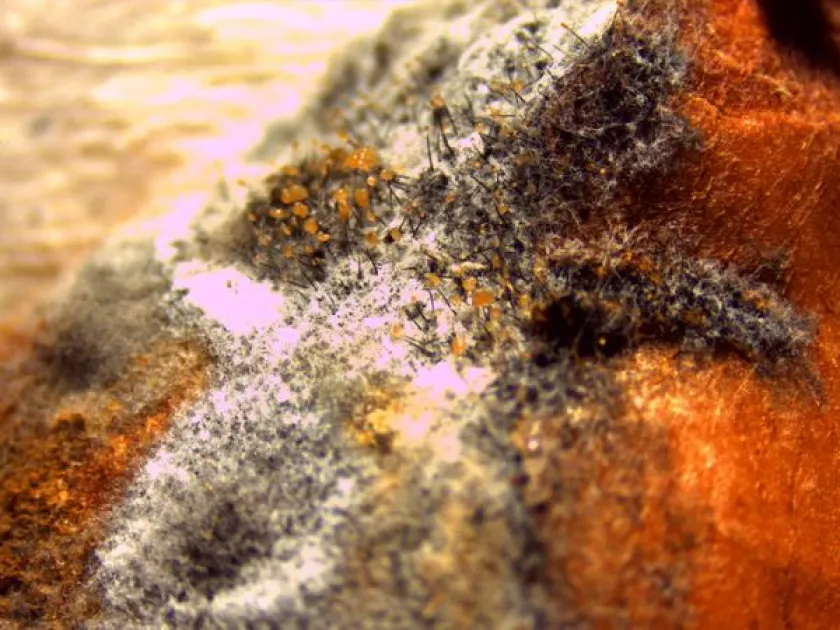
The disease is caused by the fungus Ceratocystis fimbriata, an ascomycete pathogen known for colonizing vascular tissues in various woody and herbaceous plants.
This fungus produces chlamydospores that allow it to survive in soil for extended periods. It also generates conidia and ascospores that facilitate rapid transmission via wind, rain, or contaminated agricultural tools.
Infection typically occurs through wounds on the bark, root system, or pruning cuts. The pathogen secretes cell-wall-degrading enzymes, allowing it to penetrate deeply into the xylem and interfere with water transport.
Different strains of Ceratocystis fimbriata exhibit high host specificity, primarily targeting economically significant crops such as coffee, citrus, cocoa, and hops.
The biology of the pathogen makes it highly adapted to internal plant environments, where it can spread rapidly during periods of high physiological stress for the host plant.
Conditions for development
The fungus thrives in warm environments, with optimal infection occurring at temperatures between 20°C and 30°C. Warm soil and air conditions significantly accelerate the pathogen's growth.
High moisture levels in the soil are a critical factor for the development of root infections. Waterlogged fields provide an ideal medium for spore germination and mycelial spread.
Mechanical injury during cultivation, harvesting, or pruning is the primary gateway for infection. Any wound provides the fungus with an entry point to the vascular system of the host.
Movement of contaminated soil and the use of infected nursery stock are the most common ways the disease spreads across large distances to new plantations.
High-density planting and poor air circulation within the canopy create a microclimate that promotes the survival and spread of fungal spores on leaf and bark surfaces.
Why it matters
Ceratocystis wilt is devastating to the coffee and cocoa industries. Outbreaks can result in the total loss of plantations, causing severe economic damage to smallholders and large estates alike.
Because the fungus is soil-borne, infected fields often remain unsuitable for cultivation of susceptible crops for many years, forcing farmers to abandon high-value lands.
In hops, the disease destroys the quality of the cones and reduces oil content, making the harvest unusable for brewing purposes. This leads to substantial financial losses for hop growers.
The long-term impact involves the degradation of perennial crop orchards. The need for constant replanting and the eventual destruction of infected trees increase production costs significantly.
The pathogen's ability to survive in both the soil and the woody tissues of the host makes it one of the most difficult diseases to eradicate once it is established in a growing region.
Protection
Sanitation is the most effective management strategy. Infected plants must be removed promptly, including the roots, and burned to minimize the inoculum load in the field.
Strict disinfection of pruning tools is essential. Using alcohol or bleach solutions between every tree or row helps prevent the mechanical transfer of spores by field workers.
Improving soil drainage and preventing water stagnation are critical to reducing the risk of root rot. Healthy, well-nourished plants are generally more resilient to initial infections.
The use of certified disease-free nursery stock is mandatory for maintaining the health of new plantations. Quarantines and movement restrictions for planting materials are vital for disease control.
Chemical control options remain limited due to the systemic nature of the fungus within the vascular tissues. Therefore, integrated pest management focused on prevention and early detection remains the industry standard.
Pathogens and affected parts
Affects crops · 5
Discussion
No discussions yet — be the first.