
Description
Symptoms
The diagnostic symptom is the formation of dense clusters of thin, stunted, and abnormal branches, which gives the disease its common name, Witches' broom.
These broom-like structures are the result of the fungus inducing rapid, uncontrolled division of cells in the meristematic tissues of the cacao tree.
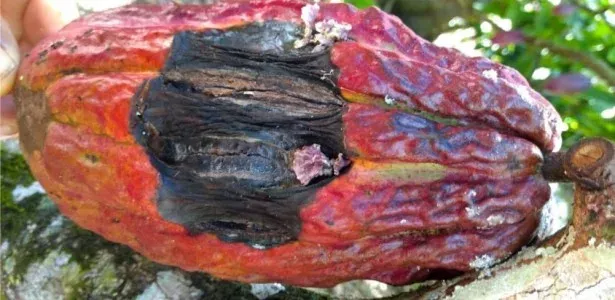
Infected pods suffer from severe malformation; they often harden, lose their healthy texture, and turn dark brown or black before reaching maturity.
In humid conditions, the mycelium may become visible on the surface of dead broom branches, where it eventually forms small, mushroom-like fruiting bodies.
The tree's architecture is significantly altered as the broom-like growth redirects energy away from healthy vegetative and reproductive development.
Pathogen
The causative agent of the disease is the basidiomycete fungus Crinipellis perniciosa (also classified as Moniliophthora perniciosa), which strictly targets cacao trees.
The fungus develops its mycelium within the vascular tissues of the host plant, effectively hijacking the nutrient transport systems to feed itself.
Its life cycle involves the production of basidiocarps, which typically sprout from dead twigs or mummified pods under conditions of high humidity.
The spores are wind-dispersed, allowing the pathogen to travel across vast distances and infect new branches or fruit structures on healthy trees.
This fungus is highly specialized, having evolved specific mechanisms to breach the defensive layers of the cacao plant during the most active growth phases.
Conditions for development
High relative humidity is the primary driver of infection, as the spores require a film of moisture on the plant surface to germinate and penetrate the tissue.
Temperatures ranging from 22 to 26 degrees Celsius provide the optimal environment for the mycelial growth and rapid spread of Crinipellis perniciosa.
Overcrowded plantations with poor canopy ventilation create stagnant pockets of moisture, which significantly increase the incidence rate of the disease.
Rainy seasons are particularly dangerous, as the repeated wetting of the canopy coincides with the peak sporulation periods of the fungus.
Presence of debris from previously infected pods on the plantation floor acts as a persistent reservoir, ensuring the pathogen remains viable throughout the year.
Why it matters
Witches' broom is widely considered the most devastating disease for cacao production, potentially leading to total crop failure in highly infested regions.
Beyond immediate yield loss, the cumulative impact of the disease causes trees to weaken significantly, leading to senescence and death within a few seasons.
The economic burden is substantial, as farmers must invest heavily in labor-intensive sanitation practices to keep the spread of the fungus at a manageable level.
The quality of harvested cocoa beans is severely degraded in infected pods, making the produce unsuitable for processing into high-quality chocolate products.
The disease forces a change in regional agricultural strategies, often requiring the replacement of traditional cacao varieties with resistant cultivars.
Protection
Strict sanitary pruning of all brooms and removal of infected pods is the cornerstone of disease management, preventing further sporulation.
Maintaining proper tree spacing and thinning the canopy helps improve air circulation, effectively lowering the humidity levels that the fungus requires.
The long-term solution relies on the genetic improvement of cacao, focusing on breeding and distributing varieties with high resistance to the pathogen.
Copper-based fungicides can offer a layer of protection, though their application is often restricted by the practical difficulties of spraying large trees.
- Regular plantation inspections.
- Burning of all removed infected material.
- Strategic selection of disease-resistant clones.
- Integrated pest and disease management programs.
Pathogens and affected parts
Affects crops · 1
Discussion
No discussions yet — be the first.