
Description
Symptoms
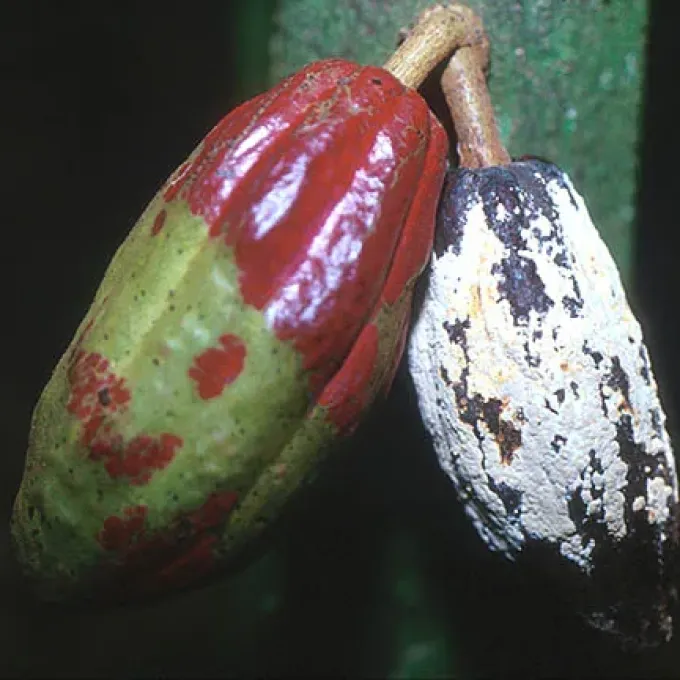
The first symptoms of infection can be deceptive. Infected pods may appear to ripen prematurely or grow larger than average, which can mislead farmers into thinking the harvest will be abundant.
As the disease progresses, necrotic spots appear on the surface of the pod. These spots eventually turn dark brown or black and may cause the pod to become misshapen or develop lumpy, irregular surfaces.
When an infected pod is cut open, the internal contents are typically found to be a degraded, brown, mushy mass. The normal white pulp of the cocoa pod disappears, and the seeds become fused together.
The most diagnostic sign is the appearance of a creamy or white, powdery layer on the pod's exterior. This layer is composed of masses of fungal spores that are released when the pod skin eventually ruptures.
In the final stages, the entire pod turns into a dry, hardened, and lightweight husk. Inside, the beans are shriveled, necrotic, and completely devoid of any commercial or biological value.
Pathogen
Cacao Pod Rot, also known as frosty pod rot, is caused by the fungal pathogen Moniliophthora roreri. This fungus belongs to the order Agaricales and is highly specialized to infect the fruits of the cacao tree.
The pathogen reproduces by releasing vast quantities of spores from the surface of infected pods. These spores are light and powdery, allowing them to be easily dispersed over long distances by wind and water splash.
Unlike many other pathogens, Moniliophthora does not require pre-existing wounds on the cacao pod to enter the plant tissues. It can penetrate the epidermis of healthy pods directly, making it an extremely virulent disease.
The fungal mycelium colonizes the internal tissues of the pod rapidly. By utilizing the nutrients intended for the developing seeds, the fungus prevents normal bean formation and maturity.
The life cycle of the pathogen is well-adapted to tropical environments. The fungus maintains its presence in the canopy of trees, constantly producing new inocula as long as susceptible host material is available.
Conditions for development
High relative humidity is the most critical environmental factor for the development of Moniliophthora. Wet conditions facilitate the germination of spores on the surface of the cacao pods.
Optimal temperatures for the fungus range between 20°C and 28°C. This temperature range is characteristic of most cacao-growing regions, making the crop highly vulnerable throughout the year.
Poor ventilation within the cacao plantation canopy promotes disease spread. Dense planting reduces the airflow necessary to dry off the pods after rainfall, creating a favorable microclimate for the fungus.
Insufficient farm management, such as a lack of regular pruning, leads to high humidity and shade, which are ideal conditions for the survival and multiplication of the pathogen.
The presence of abandoned or unharvested pods on the trees or the ground serves as a constant reservoir for the disease, allowing it to spread efficiently to healthy young pods.
Why it matters
The economic impact of Cacao Pod Rot is devastating. In heavily infested areas, losses can reach 100% of the harvest, rendering cocoa production entirely unfeasible for local farmers.
The quality of the cocoa beans is completely compromised. Infected pods contain beans that are unusable for fermentation, as they lack the necessary components to develop the characteristic chocolate flavor.
The pathogen is highly aggressive and can cause rapid epidemics across entire regions. This has historically led to the collapse of cocoa industries in several Latin American countries.
The financial burden of constant disease monitoring and manual sanitation increases the cost of production significantly, often making smaller, traditional farms unsustainable.
Continued infection weakens the overall health of the trees. The energy required by the tree to combat the pathogen leads to lower vegetative growth and reduced yields in subsequent seasons.
Protection
Sanitation is the cornerstone of managing this disease. Farmers must perform frequent, regular inspections to remove and destroy all infected pods from the trees to limit spore production.
It is crucial that removed pods are not left in the field. They should be burned or buried deeply to ensure that the fungal spores do not survive to re-infect the healthy plants.
- Regular pruning of cacao trees to improve air circulation and sunlight penetration.
- Routine monitoring and timely removal of all symptomatic pods.
- Selection and planting of cocoa varieties that exhibit partial resistance to the fungus.
- Implementation of biological control agents that target the pathogen during its development.
- Strict adherence to farm hygiene by disinfecting tools after handling infected material.
Chemical control is often difficult and ineffective due to the frequent rains that wash away protective treatments. Therefore, an integrated approach focusing on rigorous sanitation is the most effective.
Education and community-wide collaboration are essential. Because the fungus spreads through the air, individual efforts are only successful if the entire region practices consistent disease management.
Pathogens and affected parts
Affects crops · 1
Discussion
No discussions yet — be the first.