
Cupuacu
Theobroma grandiflorum (Willd. ex Spreng.) Schum.
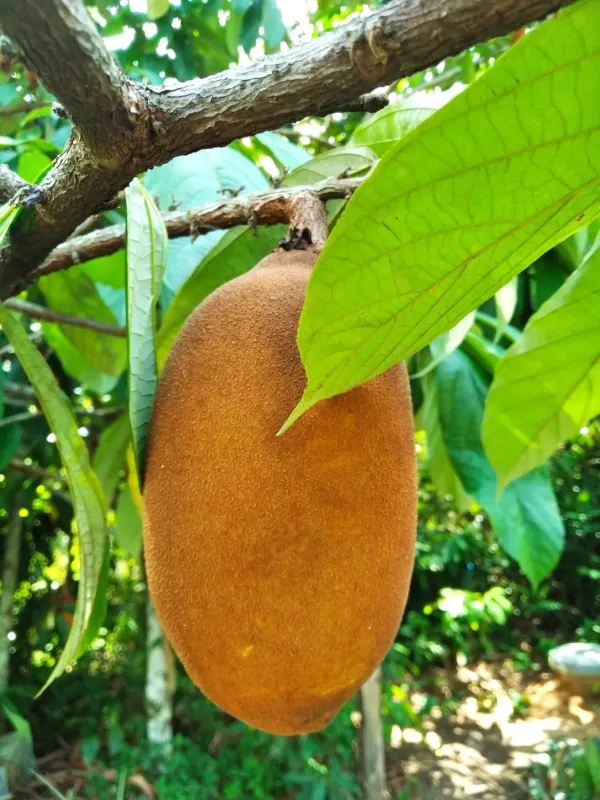
Description
Growing requirements
Cupuacu (Theobroma grandiflorum) is a tropical evergreen tree belonging to the Malvaceae family. Native to the Amazon basin, this species is closely related to cacao and is highly valued for its large, aromatic fruits that are typically harvested for their pulp and seeds.
The tree thrives in tropical environments, requiring consistent temperatures between 22 and 30 degrees Celsius. High atmospheric humidity is essential for the healthy development of its broad, deep-green leaves, and the plant is susceptible to cold stress and dry wind damage.
Ideal soil conditions for Cupuacu include deep, fertile, and well-drained soils with a high organic matter content. The crop performs best in slightly acidic soils, where the root system can develop extensively without the risk of waterlogging, which the species does not tolerate.
Agricultural management involves providing shade during the plant's early growth stages to mimic the natural forest canopy. Proper spacing and regular applications of organic fertilizers are recommended to maintain high yield levels throughout the tree's productive life cycle.
The economic utilization of Cupuacu is twofold: the creamy pulp is used in juices, ice creams, and desserts, while the seeds are processed into high-quality butter. This butter is extensively used in the cosmetics industry for its moisturizing properties and high fatty acid content.
Main diseases and pests
The most significant pathological threat to Cupuacu plantations is the fungus Crinipellis perniciosa, commonly referred to as "witches' broom." This pathogen causes irregular growth, necrosis of tissues, and significant yield loss if left unmanaged.
Various insect pests, such as aphids and specific beetles, can damage foliage and fruit development. Integrated pest management, focusing on biological control and the removal of infected plant material, is the primary method for maintaining healthy production cycles.