
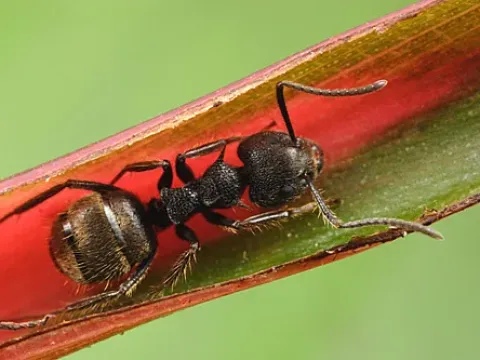
Two-spined dolichoderine ant
Dolichoderus bispinosus
The two-spined dolichoderine ant (Dolichoderus bispinosus) is a species recognized by the two prominent, backward-pointing spines located on its thorax. These spines serve as a primary taxonomic marker for identification.
What the section contains
Two-spined dolichoderine ant
Workers are typically dark-colored or black and measure between 4 to 6 mm in length. They are highly active and operate in colonies that often inhabit the canopies of tropical trees and shrubs.
These ants are known for constructing intricate carton nests, crafted from a mixture of chewed plant fibers and soil. These structures are often built in sheltered forks of branches or on the undersides of leaves.
The colonies are polygynous, meaning they may contain multiple queens, which allows for rapid expansion and long-term colonization of host plants. This social structure makes established colonies resilient and difficult to eradicate.
They exhibit defensive behavior when their nests or foraging paths are disturbed. They use their mandibles and chemical secretions to ward off intruders, showing high levels of aggression toward other insects and humans.
The primary agricultural damage caused by these ants stems from their mutualistic association with honeydew-producing insects, such as mealybugs and scales. The ants provide protection to these pests, ensuring their survival and population growth.
By protecting mealybugs from natural predators like ladybirds and parasitic wasps, the ants facilitate massive infestations. This leads to heavy sap-sucking pressure on the host plant, weakening its overall health.
Economic damage is most notable in cacao plantations. The intense feeding activity causes leaf yellowing, stunting, and can result in significant yield losses due to the plant’s inability to support fruit development.
The excess honeydew excreted by the attended pests accumulates on the foliage, acting as a substrate for sooty mold. This black fungal layer reduces the leaf's ability to perform photosynthesis, further stressing the plant.
The presence of these ants lowers the commercial quality of the harvest. Fruits contaminated with mold and direct damage from unchecked sap-sucking pests often fail to meet quality standards for processing.
The most visible sign of infestation is the presence of carton nests attached to tree trunks or primary branches. These nests appear as textured, brownish-black clumps made of organic debris.
Active foraging trails can be observed moving along branches toward young, succulent growth where mealybugs typically congregate. These trails are often busy with constant traffic during daylight hours.
Sticky, shiny foliage is a clear indication of honeydew accumulation. If the leaves feel tacky to the touch or appear coated in a sugar-like film, it suggests an active population of sucking pests being tended by the ants.
The development of a black, powdery sooty mold on the leaves and fruit serves as a secondary indicator of long-term ant presence and infestation severity.
Increased ant aggression when the tree is touched is a strong indicator of a high-density colony. When disturbed, the ants rush out to protect their territory and their honeydew-producing "livestock."
Effective management focuses on disrupting the mutualistic relationship between the ants and their honeydew-producing partners. Removing the mealybugs and scale insects is critical to forcing the ants to abandon the host plant.
Applying sticky or insecticidal barriers to the trunks of trees acts as a mechanical hurdle. This prevents ants from ascending, effectively isolating the sucking pests and leaving them vulnerable to natural predators.
Manual removal of carton nests from tree canopies can significantly reduce the local ant population. This practice is most effective when done regularly during the early stages of colony establishment.
Judicious use of systemic insecticides can help control high infestations, provided the timing minimizes impact on beneficial pollinators and natural enemies of the mealybugs.
Promoting biological control through the introduction or conservation of natural predators is a sustainable approach. Predators that feed on both the ants and the associated sucking insects help restore balance to the plantation ecosystem.