
Tropical fire ant (common in greenhouses)
Tetramorium simillimum
Description
How to identify
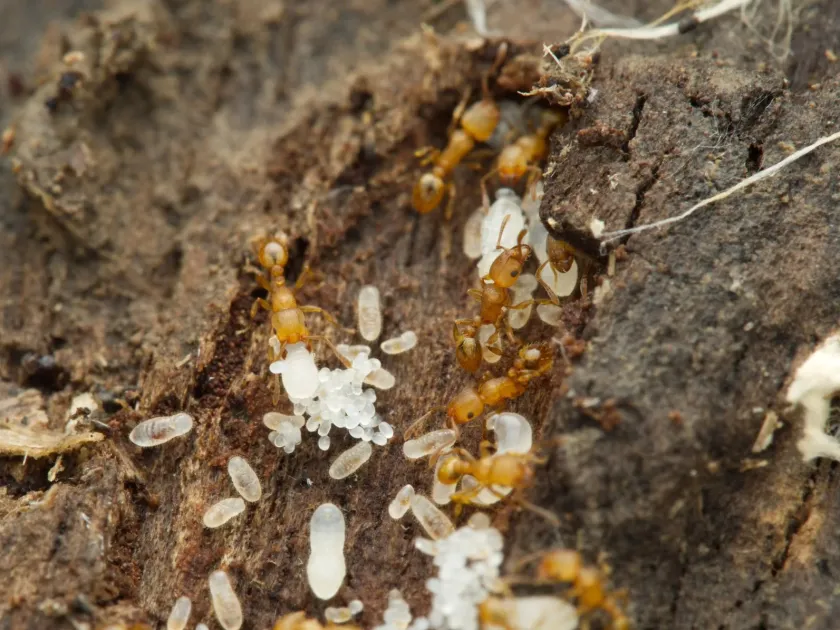
Tetramorium simillimum, commonly known as a minute ant, is a very small species, usually measuring about 2–3 mm in length. Its body color ranges from yellow-brown to reddish-brown, often appearing darker at the abdomen.
These ants are characterized by a distinct sculpture on their head and thorax, visible under magnification. They possess two small spines on the propodeum, which are key features used for accurate species identification.
The colonies are polygynous, meaning they have multiple queens, which makes the species highly resilient and capable of rapid expansion. Their ability to adapt to artificial environments makes them a significant pest in greenhouses.
They are highly opportunistic and can utilize various nesting sites, including soil, rotting wood, and even small cavities in greenhouse structures. Due to their small size, they easily remain hidden from casual observation.
The workers are constantly active, maintaining well-defined foraging trails. They are primarily nocturnal or crepuscular but remain active during the day if the environment is stable and food sources are present.
What it damages
The damage caused by Tetramorium simillimum is largely indirect. They are known to form mutualistic relationships with honeydew-producing insects such as aphids, mealybugs, and soft scales, which they protect from natural predators.
By preventing the biological control of these sap-sucking pests, the ants cause the population of aphids and mealybugs to surge. This results in severe plant stress, stunted growth, and potential death of young sprouts.
The ants frequently build nests near the root zone, causing mechanical damage to the root system during excavation. This disrupts the plant's ability to absorb water and essential nutrients effectively.
They facilitate the spread of sooty mold by protecting the pests that excrete honeydew. The accumulation of sooty mold blocks sunlight, significantly reducing the efficiency of photosynthesis in infested plants.
Furthermore, these ants can act as vectors for various plant pathogens. By moving between plants to attend to their "livestock," they efficiently transmit fungal and viral diseases throughout a nursery or greenhouse.
When it appears
In tropical climates or indoor environments like greenhouses, Tetramorium simillimum is active year-round. They thrive in temperatures between 20°C and 30°C, typical of protected cropping environments.
Activity levels increase significantly during spring and summer, matching the peak development of their aphid and mealybug partners. During these months, the foraging drive is at its highest.
During the winter, if the greenhouse is heated, the ants continue to forage normally. They congregate near heat sources, such as heating pipes, where they maintain stable nesting conditions despite outdoor cold.
The establishment of new colonies often happens when a mated queen finds a favorable microclimate, such as in a new pot of soil. This highlights the risk of introducing the pest via contaminated potting media.
Because they are cosmopolitan, they can be introduced into new regions at any time of the year. Once established, their rapid reproductive rate makes it difficult to eradicate them without thorough measures.
Signs of infestation
Visible trails of ants moving towards plants are the most common sign of an infestation. If ants are observed climbing stems, it is almost certain that aphids or mealybugs are present on the upper parts.
Small mounds of loose soil on the surface of potting soil or near the base of the plant are clear indications of nesting activity. These mounds are often refreshed after watering the plants.
Sticky honeydew residues on leaves are a strong indicator of an ant-pest interaction. The ants clean this honeydew, keeping their protected pests healthy and active on the plant foliage.
Yellowing, curling, or wilting leaves without obvious mechanical injury suggest sap-sucking activity. A closer inspection of the underside of these leaves will typically reveal the protected colony of pests.
The sudden presence of small ant workers on benches or structural greenhouse parts indicates that a satellite nest or foraging group is nearby. High density of ants suggests that a mature colony is well established.
Control measures
The most effective strategy involves a two-pronged approach: managing the sap-sucking pests (aphids/mealybugs) and targeting the ants themselves. Controlling the honeydew producers often reduces the ants' interest in the plants.
Baiting is the most recommended chemical control method. Using baits with slow-acting insecticides (like boric acid or hydramethylnon) allows workers to carry the poison back to the nest, eliminating the queens.
Physical barriers such as sticky traps or Tanglefoot on benches and pots can be used to prevent ants from reaching the plants. Ensure that plant foliage does not touch walls or other surfaces to avoid bridging.
Cultural control is essential. This includes removing weeds, cleaning up debris, and ensuring that all potting media is sterilized before use. Proper sanitation prevents ants from finding favorable nesting spots.
When infestation is localized in small pots, submerging the pot in water (ensuring the soil is covered) for a short period can force the ants out, allowing for manual removal or chemical treatment of the substrate.
Taxonomy
- Latin name
- Tetramorium simillimum
- Order
- Hymenoptera
- Family
- Formicidae
- EPPO code
- TETMSI
Discussion
No discussions yet — be the first.