
Western mound ant
Formica integroides
Description
How to identify
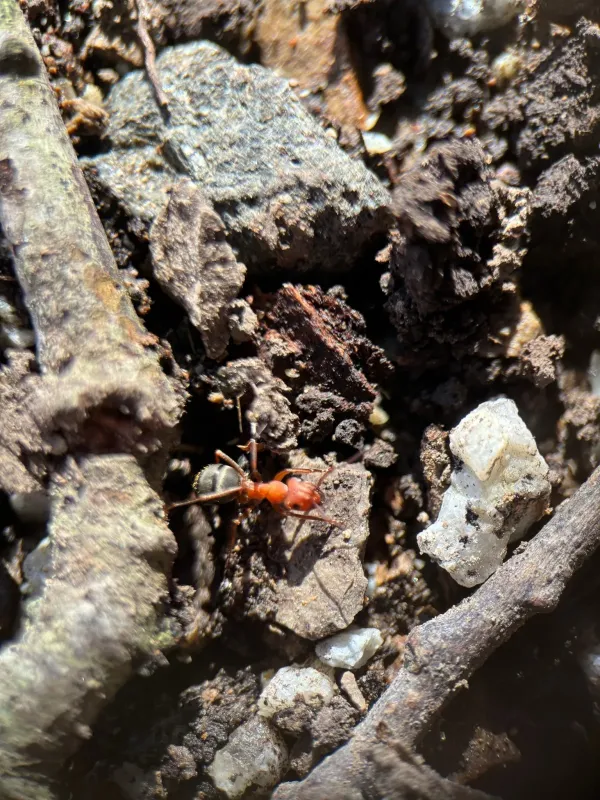
The Western mound ant (Formica integroides) belongs to the Formicidae family and is known for its distinct reddish-brown and black coloration. These ants are among the larger species found in temperate regions.
Workers range from 5 to 9 mm in length. They are recognized by their aggressive behavior and their ability to construct large mounds consisting of twigs, pine needles, and organic debris.
The species is polygynous, meaning their nests contain multiple queens, which leads to rapid colony expansion and high survival rates within the established habitat.
They typically nest in the soil near tree bases, rotting logs, or in open areas that receive sufficient sunlight. Their structural presence can alter the immediate soil environment around trees.
While they are ecologically important in forest ecosystems, their tendency to farm sap-sucking insects makes them a nuisance in orchards and commercial landscaping environments.
What it damages
The primary agricultural damage caused by Formica integroides is their mutualistic relationship with aphids and scale insects. Ants protect these pests from predators to harvest the honeydew they excrete.
By preventing natural enemies like ladybugs from feeding on aphids, the ants ensure that aphid populations reach levels high enough to cause severe damage to host plants.
Plants infested by these managed aphid colonies suffer from nutrient loss, stunted growth, and distorted leaves. This leads to reduced yield in fruit trees and poor development in ornamental plants.
The accumulation of honeydew on the leaves fosters the growth of sooty mold, a fungus that blocks light and reduces the efficiency of photosynthesis across the canopy.
Furthermore, the ants' constant building and excavating activities at the base of trees can sometimes disrupt small root systems, creating stress for young or vulnerable plantings.
When it appears
The seasonal activity of the Western mound ant starts in early spring as temperatures rise, typically when soil temperatures exceed 10°C, marking the beginning of their foraging phase.
From late spring through summer, the ants are highly active in tending their aphid herds. This is the period when they are most frequently observed traversing tree trunks.
During peak summer, the colony concentrates on brood rearing and the maintenance of their mound structures, ensuring a steady food supply from their managed aphids.
As autumn approaches and temperatures drop, foraging activity decreases significantly. The colony retreats into the deeper sections of the mound to overwinter in a semi-dormant state.
Early spring is the most crucial period for intervention, as this is when the ants move wintering aphid eggs or young nymphs to the fresh, budding leaves of trees.
Signs of infestation
The most visible sign of an infestation is a steady stream of ants moving in columns up and down the tree trunk, often heading toward the tender green shoots.
Observing curled, yellowing, or sticky leaves is a strong indicator that aphids are present and being actively farmed by the ant colony.
The discovery of large, dome-shaped mounds made of organic material (needles, twigs) at the base of trees is a definitive sign of an established Formica integroides nest.
Visible trails on the ground or bark, often kept clear of debris by the ants, serve as high-traffic routes between the mound and their food sources in the canopy.
Increased aggression towards predators, such as birds or other insects approaching the tree, is another hallmark of a colony protecting its valuable honeydew source.
Control measures
Physical barriers are highly effective; applying sticky traps or banding tape around the tree trunk prevents the ants from climbing up to manage their aphid herds.
Implementing a control program for aphids is essential. By reducing the population of aphids, the ants lose their primary food source and are forced to relocate.
For persistent colonies, the use of slow-acting toxic baits allows foraging workers to carry the poison back to the nest, eventually eliminating the queens and the entire colony.
Cultivating the soil around the base of the tree and disrupting the mound structure can make the habitat undesirable, forcing the ants to move away from protected areas.
- Installing sticky traps on tree trunks.
- Application of targeted systemic insecticides.
- Removing debris and weeds around tree bases to minimize nesting sites.
Taxonomy
- Latin name
- Formica integroides
- Order
- Hymenoptera
- Family
- Formicidae
- EPPO code
- FORMIO
Discussion
No discussions yet — be the first.