
Western carpenter ant
Camponotus modoc
Description
How to identify
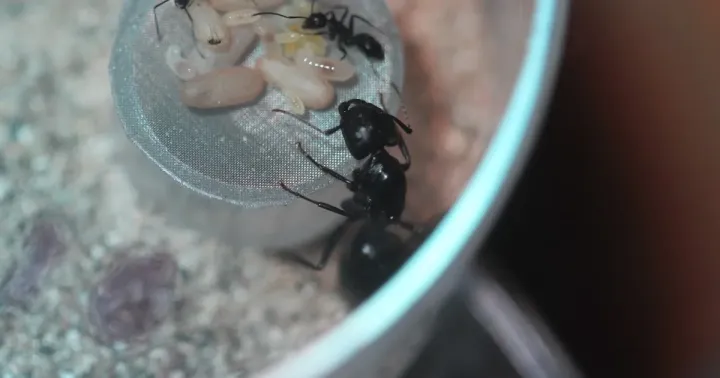
The Western carpenter ant (Camponotus modoc) is a member of the Hymenoptera order and Formicidae family. Workers typically measure between 12 to 15 mm in length.
Their bodies are generally dark brown or black, often featuring reddish hues on the thorax or legs. A key diagnostic feature is the lack of a stinger and the presence of fine hairs on the abdomen.
They undergo a complete life cycle comprising egg, larva, pupa, and adult stages. Colonies can thrive for many years, continuously expanding their complex tunnel networks.
It is important to note that these ants do not consume wood as a nutrient source; they excavate it solely to build nesting galleries and chambers for the colony.
Seeing individual ants foraging is often the first visible hint, though the vast majority of the colony remains hidden deep within the wood structure.
What it damages
This species primarily targets decaying or moisture-damaged trees, but mature colonies may eventually expand their excavations into healthy living tissues.
Common hosts include various conifers and hardwoods, including spruce, fir, pine, and fruit trees such as apple or pear in residential and commercial orchards.
Damage occurs through the mechanical destruction of the xylem, which disrupts the tree's vascular system, leading to impaired sap flow and structural weakness.
Trees infested by these ants become prone to stem failure and breakage during heavy winds, which can lead to significant loss of value in forestry and horticulture.
Additionally, if nests are established near buildings, there is a risk of the infestation spreading to structural wooden elements, causing property damage.
Signs of infestation
A primary indicator is the presence of frass — a fine, sawdust-like material ejected by ants from the tunnel entrances at the base of the tree or from cracks.
Tapping the trunk may reveal hollow, thumping sounds, suggesting that the internal integrity of the wood has been compromised by extensive gallery networks.
Visible exit holes on the bark surface are clear evidence of a well-established colony that has been active for a long period within that specific tree.
Soft rustling or scratching sounds heard near the trunk during quiet periods are often audible indicators of large worker populations moving within the galleries.
Wilting of foliage on specific branches or sections of the canopy can indicate that the vascular pathways have been severed by the ants' excavations.
Control measures
Sanitary pruning and the removal of severely infested limbs or dead trees are the most effective cultural methods to manage and eliminate local nesting sites.
Chemical control can be implemented using contact insecticides applied directly to entry points or ant trails to disrupt the colony's foraging activities.
Applying sticky barriers or specialized tree guards can prevent ants from traveling up the trunk and colonizing the upper reaches of the tree canopy.
Maintaining tree vigor through proper irrigation and balanced fertilization increases natural resistance, making trees less susceptible to initial infestation.
- Monitor tree bases regularly for sawdust accumulations.
- Clear away stumps and decaying wood debris near plantations.
- Use approved bait stations for effective colony suppression.
Taxonomy
- Latin name
- Camponotus modoc
- Order
- Hymenoptera
- Family
- Formicidae
- EPPO code
- CAMOMO
Discussion
No discussions yet — be the first.